


India's Ongole face decline while becoming most expensive cattle in Brazil
A record-breaking sale saw an Ongole purebred cow sell for more than $ 4 million in Brazil's Minas Gerais earlier this year
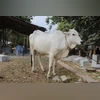 "Ongole cattle in India")
Ongole cattle | Photo: WIkimedia
Listen to This Article
India’s indigenous Ongole cattle breed is facing a sharp decline domestically, even as it thrives in Brazil, where it has become one of the most expensive and sought-after cattle breeds, according to a report by The Indian Express.
In Brazil, 80 per cent of the 226 million cattle are Ongoles. These animals are bred primarily for beef production, leading to the rise of supercows like Viatina-19. In February 2025, a record-breaking sale in Brazil’s Minas Gerais saw an Ongole purebred cow, Viatina-19, sold for $4.38 million (Rs 40 crore), highlighting the breed’s value in the global market.
In contrast, Ongole cattle numbers in India have plummeted to just 634,000 in 2019 from 1.5 million in 1944, despite government-led conservation efforts. Overall indigenous cattle population has also declined by 9 per cent (2007-2012) and another 6 per cent (2012-2019), while exotic and crossbred cattle have surged by nearly 30 per cent in the same period.
Farmers in India prefer crossbred cows due to their higher milk yield, despite government schemes like the Rashtriya Gokul Mission (RGM) promoting indigenous breeds. The price disparity is stark -- an Ongole cow in India costs around Rs 1 lakh, while a prized bull sells for Rs 10-15 lakh, far below the multi-crore valuations in Brazil.
What are Ongole cattle?
Ongole cattle, also referred to as Ongolu Gitta, are an indigenous cattle breed that originate from Prakasam District in Andhra Pradesh. The Ongole breed has deep historical and cultural roots in India due to their heat tolerance, disease resistance, and ability to survive on low fodder make them ideal for Indian conditions.
Also Read

 "PM Modi")
 "Stray cattle, cows, cows on road, animals")
 "Indiam EAM S Jaishankar with his Irish counterpart Simon Harris")
 "Chess Grandmaster Vaishali Rameshbabu")
 "Gene Hackman, Betsy Arakawa")
Ongole bulls exported to Latin America
As Latin America’s native breeds were smaller, Ongole bulls were exported from India as early as 1885. Over time, an estimated 7,000 Ongole cattle were sent to South America, which has now shaped Brazil’s agricultural revolution.
What led to the decline of Ongole cattle in India?
The shift towards crossbred cattle with higher milk yields and reduced demand for draught animals due to mechanisation has contributed to the breed’s decline. Experts also blame selective breeding for strength rather than milk yield, as Ongole bulls were traditionally valued for draught power. However, with mechanisation replacing bull labour, their importance in farming has diminished.
Is there any chance of reviving the Ongole population?
Veterinary experts at Guntur’s LAM Farm, one of India’s few dedicated Ongole conservation centres, are using advanced breeding techniques like IVF-embryo transfer to maintain the purity of the breed. However, they face challenges due to declining demand for the breed.
Moreover, India has had restrictions on cattle exports since the 1960s. The country had briefly considered lifting the ban in 2023, but the proposal faced backlash. Meanwhile, Brazil’s rigorous cattle lineage tracking has helped sustain and improve the breed, a model that Indian farms could replicate.
More From This Section
 "Modi, Narendra Modi")
 "Fog, New Delhi Fog, Winter")
 "insolvency")
 "Donald Trump, Trump")
Topics : Cattle cows Brazil India BS Web Reports
Don't miss the most important news and views of the day. Get them on our Telegram channel
First Published: Mar 08 2025 | 10:19 AM IST