


PM Modi asks scientists to focus on R&D, secure patents for new drugs
PM says move will ensure self-reliance in the pharmaceuticals segment
 "PM Narendra Modi")
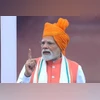
Speaking from the Red Fort on the occasion of India’s 79th Independence Day, Modi said this would enable the country not only to meet its own healthcare needs but also to emerge as a global hub of medical innovation. | Image: Screen Grab
Listen to This Article
Prime Minister Narendra Modi on Friday asked scientists and entrepreneurs to focus more on research and development (R&D), and secure patents for new drugs and medical technologies to ensure self-reliance in the pharmaceutical segment.
Speaking from the ramparts of the Red Fort on the occasion of India’s 79th Independence Day, the PM said this move will ensure that India not only meets its own healthcare needs but also becomes a global hub of medical innovation.
The call comes at a time when India has been lagging behind — according to a Department of Pharmaceuticals (DoP) study paper on industry-academia linkage in the segment — in terms of R&D spending.
The study states that while a number of initiatives for industry-academia linkages in India have produced positive research results over the years, due to their sporadic nature, India’s share of world researchers has remained at about 2 per cent, compared to 20 per cent each of the US and China.
“An analysis of the share in R&D reveals that in India, the government contributes between 75 per cent and 80 per cent, the private sector contributes 20-25 per cent, and universities contribute 3 per cent,” the paper added.
Also Read

 "PM Modi, Narendra Modi, Independence Day, Red Fort")
 "Narendra Modi")
 "GST")
 "PM Narendra Modi")
In comparison, OECD (Organisation for Economic Co-operation and Development) countries see a 69 per cent contribution from private sector companies, followed by universities at 18 per cent, government at 10 per cent, and non-profit organisations at 3 per cent.
Commenting on the issues faced by the pharma industry, Kiran Mazumdar-Shaw, executive chairperson of Biocon and Biocon Biologics, told CNBC TV18 that the timeline to take a new molecule from the lab to markets is very long, making investments in research and innovation extremely risky. “Unless we have very bold regulatory reforms that shorten this lab-to-market journey, we may not see the research investment needed for a country like India,” she added.
Exhorting the industry to demonstrate India’s ability to lead in science, technology, and human welfare, Modi also urged the nation to achieve self-reliance in medicines and innovation, highlighting the country’s strength as the pharmacy of the world. India currently has approximately 3,000 pharmaceutical businesses with over 10,500 manufacturing facilities, offering around 60,000 generic brands in 60 therapeutic categories.
Since the Covid-19 pandemic blew over, many Indian pharmaceutical companies have been looking to jump on the generic bandwagon for off-patent molecules while pressing on plans to develop a pipeline of biosimilars.
Pharma firms have gone on a generic spree after several blockbuster molecules used in diabetes medications, such as empagliflozin and dapagliflozin, went off patent in the last few years.
Major blockbuster molecules that have seen several generic launches in this timeframe include empagliflozin and dapagliflozin. These launches saw prices of such generic drugs fall by 85 per cent in the Indian market.
Similarly, firms such as Sun Pharma, Torrent, Lupin, Glenmark, and Dr Reddy’s are also working on generic versions of weight-loss drugs based on the blockbuster molecule semaglutide, which is expected to go off patent by March 2026. According to the DoP’s study paper, over 300 drug patents in different categories and geographies will be expiring every year during the patent cliff period of 2022 to 2032.
Obesity crisis flagged, lower oil intake mooted
Prime Minister Narendra Modi in his I-Day speech on Friday expressed concerns over obesity becoming a future crisis for India, and asked people to cut down on consumption of cooking oil by at least 10 per cent.
India is currently projected to have the third-highest population of overweight people after the US and China.
Asking every family to take the concern seriously, the PM resolved that the country must protect itself from obesity. “While many steps will have to be taken, I have made one small suggestion that every family resolve that when cooking oil comes into the house, it should be 10 per cent less than usual, and its use should also be 10 per cent less. By doing so, we shall make our contribution towards winning the fight against obesity,” he said.
More From This Section
 "Calcutta High Court")
 "Ajay Kumar, UPSC Chairman")
 "cloudburst")
 "Pramod Sawant, Pramod, Sawant, Goa CM")
 "The year was a mixed bag for the real estate industry as housing supply slowed down but record investments came in. Industry experts believe that demand will stabilise as sales are likely to be lower compared to 2023.")
Don't miss the most important news and views of the day. Get them on our Telegram channel
First Published: Aug 15 2025 | 3:31 PM IST