


At least 3 years' practice must to apply for judicial service exams: SC
SC says fresh law graduates can no longer apply directly for civil judge posts; 3-year practice rule restored for future judicial service recruitments from May 20
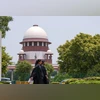 "Supreme Court, SC")
The ruling was delivered in the All India Judges Association case. | (Photo:PTI)
Listen to This Article
The Supreme Court on Tuesday restored the condition that a minimum of three years' practice as an advocate is required for candidates applying to entry-level judicial service posts.
The period of practice may be counted from the date of provisional enrolment. The condition, however, will apply only to future recruitments from 20 May.
“All High Courts and state governments shall amend the service rules to the effect that candidates desirous of appearing in Civil Judge (Junior Division) must have a minimum practice of three years to be eligible for said examination,” said a bench comprising Chief Justice of India D Y Chandrachud, and Justices A G Masih and K Vinod Chandran.
The court clarified that this requirement would not apply to recruitments where the selection process has already been initiated. It will apply prospectively to the next round of recruitment.
Also Read

 "Reliance Industries, RIL")
 "Ashoka University Professor Ali Khan Mahmudabad")
 "Jagdeep Dhankhar, Jagdeep, Dhankhar, VP")
 "Supreme Court, SC")
 "RIL, Reliance, Reliance Industries")
To qualify, candidates must possess a certificate attested either by the Principal Judicial Officer of the court concerned or by an advocate with a minimum of 10 years’ standing, duly endorsed by the Principal Judicial Officer of the relevant district or station.
In the case of persons practising at the Supreme Court or a High Court, a certificate from an advocate with at least 10 years' standing, endorsed by an officer designated by the court, will suffice. Experience as law clerks can also be counted towards the three-year requirement.
“We further direct that the experience of candidates gained while working as law clerks with any judge or judicial officer in the country will also be considered while calculating the total number of years of practice,” the court said.
The court observed that allowing fresh law graduates to enter judicial service without even a single day of practice “has not been a successful experience.”
“For the last 20 years, during which fresh law graduates have been appointed as judicial officers without a single day of practice at the Bar, the experience has not been successful. Such judges face many challenges. From the very day they assume office, they deal with issues of life, liberty, property, and reputation of litigants. Neither knowledge based on law books nor pre-service training can substitute for first-hand experience of court functioning and the administration of justice. This is possible only when the candidate is exposed to the functioning of the court and observes how lawyers and judges operate,” the court said.
Legal experts said the immediate impact would be felt by the graduating class of 2025, who will no longer be eligible to directly appear for judicial service examinations.
“Graduates from previous batches who are not yet enrolled as advocates will face the same issue. While the aspirants may see this as a setback, the judiciary should ultimately benefit from this decision,” said Kapil Arora, partner at Cyril Amarchand Mangaldas.
“Judicial service presented itself as a direct and stable avenue for ambitious law students immediately upon graduation, through competitive exams without courtroom exposure. The new experiential requirement will defer this entry, compelling graduates to meaningfully engage with the Bar and immerse themselves in procedural, evidentiary and ethical aspects of litigation,” said Tushar Kumar, an advocate practising in the Supreme Court.
Rishabh Gandhi, managing partner of Rishabh Gandhi and Advocates and a former judge, said: “I have worked alongside judges appointed directly from law school and appeared before them. While many were academically strong, some lacked the practical grounding essential for real courtroom situations.”
He added that the new rule must be accompanied by systemic reforms.
“We must sanction more posts, strengthen training academies, and expand clerkship and mentorship opportunities. Law schools must prioritise practical skills along with academic performance. The Supreme Court’s ruling affirms that judicial office demands readiness shaped by real legal experience, not just a degree,” he said.
Background
The ruling was delivered in the All India Judges Association case.
Previously, most states required candidates to have at least three years of legal practice before applying for judicial service. However, in 2002, the Supreme Court struck down this requirement, allowing fresh graduates to apply for Munsiff-Magistrate posts.
Subsequently, petitions were filed in the Supreme Court seeking to reinstate the requirement, with several High Courts supporting the move to allow only experienced advocates to apply.
More From This Section
 "Building collapse, Damage, Kolkata building collapse")
 "Rajnath Singh, Defence Minister")
 "Oil field")
 "rainfall, farmer, agriculture, rain")
 "The slums are spread across 600 acres of prime land in Central Mumbai. In 2022, the Adani group had won the bid to redevelop the slums. (Photo: Prachi Pisal)")
Don't miss the most important news and views of the day. Get them on our Telegram channel
First Published: May 20 2025 | 8:34 PM IST