


SC reserves verdict on CoC's power to withdraw approved resolution plan
Indian Bank argues creditors should be able to reconsider an approved plan when circumstances change; resolution applicant says withdrawal is barred under IBC
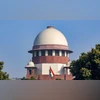 "SC, Supreme Court")
A Bench of Justices J B Pardiwala and K Vinod Chandran was hearing Indian Bank’s challenge to an April 20, 2026, order of the (NCLAT) in the insolvency proceedings of TD Toll Road Private Limited | (Photo:PTI)
Listen to This Article
The Supreme Court on Wednesday reserved its judgment on whether a resolution plan approved by the Committee of Creditors (CoC) can be withdrawn after it has been submitted to the National Company Law Tribunal (NCLT) for approval.
The Committee of Creditors (CoC) is the primary decision-making body under the Insolvency and Bankruptcy Code (IBC) for managing a financially distressed company's insolvency process.
A Bench of Justices J B Pardiwala and K Vinod Chandran was hearing Indian Bank’s challenge to an April 20, 2026, order of the National Company Law Appellate Tribunal (NCLAT) in the insolvency proceedings of TD Toll Road Private Limited.
The appellate tribunal had overturned the NCLT’s decision permitting withdrawal of the application seeking approval of the resolution plan.
The NCLAT had held that once the CoC approves a resolution plan and places it before the adjudicating authority, the creditors cannot subsequently withdraw their approval.
Also Read

 "hospitalisation, hospital, Covid, lungs")
 "rupee, RBI, FCNR(B), dollar inflows, forex intervention, foreign exchange reserves, banking system liquidity, WACR, VRRR, cash reserve ratio, ICRR, dollar swap")
 "Supreme Court")
 "rbi, arc, ibc")
Appearing for Indian Bank, Senior Advocate Gopal Sankaranarayanan argued that the CoC should retain the ability to reconsider its decision when circumstances materially change.
He said the plan in the case was approved during the Covid-19 period, when toll collections were adversely affected, but the corporate debtor’s financial position had subsequently improved significantly.
According to Sankaranarayanan, the CoC held several meetings between its 14th and 22nd meetings and found a substantial improvement in the company’s solvency position. The creditors, therefore, wanted to invite fresh resolution plans reflecting the changed financial circumstances.
Senior Advocate Nidhesh Gupta, representing the successful resolution applicant, opposed the withdrawal. He argued that a resolution plan approved by the CoC could not be treated as an ordinary contract governed solely by the Contract Act during the period between CoC approval and NCLT sanction.
Relying on the Supreme Court’s ruling in Ebix Singapore, Gupta submitted that a resolution plan could not remain open to withdrawal or modification until approval under Section 31 of the Insolvency and Bankruptcy Code (IBC). The statutory framework, he argued, gives the plan binding consequences even before the adjudicating authority formally approves it.
Gupta also contended that the principle had to operate both ways. If a resolution applicant could not walk away merely because the corporate debtor’s financial position deteriorated, the CoC should similarly not be permitted to withdraw when the company’s finances improved.
The Bench questioned the consequences of abandoning the existing plan, particularly how creditors would recover their dues if a fresh process were initiated.
The court also examined IBBI regulations which permit CoC meetings to continue until a resolution plan is approved under Section 31 or liquidation is ordered under Section 33.
The Bench took note of the fact that the successful resolution applicant had furnished a performance bank guarantee of about ₹8.62 crore and had acted on the basis of the CoC’s approval.
The judgment was reserved after hearing the parties.
More From This Section
 "A Booth Level Officer (BLO) verifies voter details during the Special Intensive Revision (SIR) of electoral rolls")
 "Gyanesh Kumar, CEC")
 "airspace ban, pakistan India tensions, Xinjiang")
 "Rain, Delhi Rains, Monsoon")
 "Petroleum Ministry, Ministry of Petroleum and Natural Gas")
Don't miss the most important news and views of the day. Get them on our Telegram channel
First Published: Sep 30 2026 | 7:57 PM IST