


ALCM could impact 20-25 GW of renewable energy capacity, says report
JMK Research said ALCM implementation from June 2026 could hinder 20-25 GW of green open access projects due to shortage and high prices of DCR modules.
 "Solar cell")
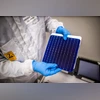
Ministry of New and Renewable Energy (MNRE) has now expanded the ALMM mandate to include solar cells. | Photo: Bloomberg
Listen to This Article
The government’s move to implement the Approved List of Cells and Manufacturers (ALCM) from June 2026 could impact green open access capacity of around 20–25 gigawatts (GW), JMK Research said in a report on Friday.
“Following the implementation of ALCM, the expected shortage of Domestic Content Requirement (DCR) modules is likely to hamper the execution of nearly 20–25 GW of green open access projects over the next two to three years. Concurrently, the high prices of DCR modules will also increase the project power tariff by up to ₹0.4–0.5 per unit,” the research firm said.
Currently, the Approved List of Models and Manufacturers (ALMM) is used as an umbrella term for non-tariff barriers to promote the domestic manufacturing capabilities of clean energy products, including solar modules and wind turbines.
Until 2025, the ALMM exclusively focused on solar modules. In an effort to enhance the integration of the upstream solar manufacturing value chain, the Ministry of New and Renewable Energy (MNRE) has now expanded the ALMM mandate to include solar cells.
Following the ALCM mandate in 2024, the MNRE published the first ALCM list in July 2025, which featured six manufacturers with a total listed capacity of 13 GW. For comparison, the ALMM list released in June 2025 included more than 100 manufacturers and a cumulative listed capacity of 91.5 GW.
Due to the wide gap in domestic manufacturing capabilities for modules and cells, the industry has asked for relaxations in the ALCM norms. In response, the MNRE issued an office memorandum on 12 August stating: “Government projects having bid submission date on or before 31 August 2025 shall be exempt from using solar PV cells enlisted in ALMM List-II.”
According to JMK Research, given the current commissioning timelines, government-bid utility projects will continue to be exempt from using non-ALCM modules for an additional 18 to 24 months compared to other renewable energy projects. This difference in exemption timelines could significantly hinder the growth of non-government bidding-based renewable energy projects, particularly in the rapidly expanding green open access and rooftop solar sectors.
More From This Section

 "Gujarat Energy Transmission Company, Power Sector, ipo, investment, public-private partnership")
 "semiconductors chipmakers")
 "online gaming, Online gambling, gaming industry")
 "take two, Online gambling, gaming industry, addiction")
 "solar, solar industry")
Topics : solar energy India solar policies solar cell
Don't miss the most important news and views of the day. Get them on our Telegram channel
First Published: Aug 22 2025 | 5:38 PM IST