


China's oil demand to peak in 3-5 years, India's to grow steadily: Moody's
But Chinese production growth set to outpace India's due to investments in offshore and shale gas while Indian firms struggle with ageing wells and slower capital flows
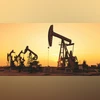 "crude oil, oil")
India also relies more heavily on taxes and dividends from its petroleum sector to support its fiscal budget than China.


Listen to This Article
Crude oil consumption in China will peak in the next 3–5 years, while in India, annual consumption growth is expected at 3–5 per cent over the same period, a report by Moody’s Ratings has said. India’s oil and gas demand growth will outpace China’s over the next decade due to slower economic growth and the accelerating penetration of new energy vehicles in China, the ratings agency said.
While both countries continue to rely heavily on oil and gas imports, Moody’s expects China’s oil demand to grow only marginally and peak at around 800 million tonnes per annum (mmtpa) by 2030, due to slower economic growth and a shift towards clean energy. Refining capacity in China is also near the state-mandated cap of 1 billion tonnes, the report noted.
Meanwhile, the report warned that India’s reliance on imports will increase if it fails to reverse the decline in domestic production, while Chinese national oil companies (NOCs) are poised to outperform their Indian counterparts in production growth over the next 3–5 years. This growth will be driven by investments in complex shale gas and offshore projects. In contrast, Indian NOCs are grappling with ageing wells and slow investment momentum.
“Additionally, Chinese NOCs’ greater value chain integration mitigates earnings volatility, and they have lower leverage and higher interest coverage,” the report said. As a result, rated Chinese NOCs will maintain their credit advantage over rated Indian NOCs, Moody’s predicted.
Also Read

 "China EU flags")
 "Chinese President Xi Jinping")
 "Nvidia")
 "Taiwan flag, Taiwan")
 "How a no-limits Russia-China pact is reshaping the post-war world order")
Policy play
Government policies in India, especially fuel price controls, will continue to have a more significant impact on the operations of NOCs, the report stated. While both countries aim to ensure price stability and adequate supply, the effect is more pronounced in India, where pricing mechanisms have led to greater volatility in earnings and cash flows, Moody’s said.
India also relies more heavily on taxes and dividends from its petroleum sector to support its fiscal budget than China.
“Chinese NOCs continue to invest heavily in exploration and development to enhance self-sufficiency. Their investments in downstream refining and petrochemical sectors will gradually decline over the next 3–5 years as most major projects have been completed. By contrast, NOCs in India will still invest heavily to expand refining and petrochemical facilities over the next five years to meet growing domestic demand,” the report added.
Government policies in China are more market-oriented. The report noted that with carbon regulation still evolving in India, Indian NOCs face less immediate pressure to invest in green technologies compared to their Chinese counterparts, who face stricter rules and are required to transition to greener practices more rapidly.
More From This Section
 "SwaRail (Photo: Google Play)")
 "Delhi High Court")
 "Travel Insurance")
 "steel pipe, oil, indian oil, lng export, liquified gas")
 "job, job hunt, job search")
Topics : China Crude Oil Oil demand Moody's ratings
Don't miss the most important news and views of the day. Get them on our Telegram channel
First Published: May 22 2025 | 9:03 PM IST