Minister of State for Petroleum and Natural Gas Suresh Gopi informed Parliament that the project has been affected by multiple factors, including disruptions during the Covid-19 pandemic and limited availability of specialised technology vendors.
The integrated ethanol bio-refinery is being set up by Bharat Petroleum Corporation Limited (
BPCL) at Bargarh under the Pradhan Mantri JI-VAN Yojana. The project, announced in 2018, involves a total approved capital investment of Rs 1,775 crore, including taxes.
“The refinery has been designed as an integrated facility with both first-generation (1G) and second-generation (2G) ethanol production units. The plant will have an annual production capacity of 3.3 crore litres from the 1G ethanol unit and three crore litres from the 2G unit. The technology for the project is being provided by Praj Industries Limited,” the minister said.
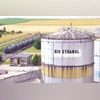
The bio-refinery, the first of its kind in India to be set up, will have the capacity to produce fuel-grade ethanol by using rice straw as the feedstock. The ethanol produced from the plant is expected to support the Centre’s Ethanol Blended Petrol Programme (EBPP) aimed at reducing dependence on fossil fuels and promoting cleaner energy.
Gopi said the project’s implementation timeline has been impacted by several constraints. Apart from pandemic-related disruptions, the availability of specialised technology vendors and extended delivery timelines for critical equipment have slowed progress. “The 2G ethanol technology for commercial-scale production is still at a nascent stage globally, with developers facing challenges in the biomass conversion process, resulting in longer commissioning timelines compared to conventional ethanol plants,” he said.
The Bargarh bio-refinery will utilise about two lakh tonnes of rice straw annually as feedstock, which will be sourced from Bhatli, Ambabhona, Sohela, Burla, Lakhanpur and nearby areas. It will contribute to a cleaner environment due to the usage of waste rice straw for ethanol production, thereby reducing waste straw burning in fields. The plant is based on zero-liquid-discharge technology, where all water will be recycled back into the plant.
The minister said that, despite the delay, the project has already generated significant employment during its construction phase. Around 15.25 lakh man-days of direct and indirect employment were created while building the facility. Once fully operational, the plant is expected to provide jobs to about 725 people.
In addition, the biomass supply chain linked to the refinery is projected to generate indirect employment for nearly 1,200 rural individuals and foster entrepreneurship among around 250 local entrepreneurs, farmers and women’s self-help groups in western Odisha, he added.


 "Ethanol")