


Private-funded highway construction model highest priority: Nitin Gadkari
Our budget is ₹3.2 trillion, and I already have an asset base of highways worth ₹12-15 trillion ready to be monetised, says minister
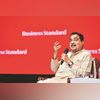 "Union Minister for Road Transport and Highways Nitin Gadkari during a fireside chat with Nivedita Mookerji at the Business Standard Manthan summit on Tuesday | Photo: Kamlesh Pednekar")
Union Minister for Road Transport and Highways Nitin Gadkari during a fireside chat with Nivedita Mookerji at the Business Standard Manthan summit on Tuesday | Photo: Kamlesh Pednekar
Listen to This Article
On the back of an aggressive asset monetisation push, the government will press the throttle on the build-operate-transfer (BOT) model — under which private developers fund highway construction — for future highway development, Union Minister for Road Transport and Highways Nitin Gadkari said.
“We are giving the highest priority to BOT. In the engineering, procurement and construction (EPC) mode, our experience has not been good,” the minister said during a fireside chat with Nivedita Mookerji of Business Standard at the Business Standard Manthan summit on Tuesday.
In EPC projects, he added, contractors are responsible for maintenance for only five years. “Our observation is that after this period, the quality of the road is not up to the mark,” he said.
“So we are now making roads only in modes where the contractor has a 10–15-year responsibility, and we will invoke their bank guarantee if the quality is not good,” the minister said.
The government already has a pipeline of seven BOT projects worth ₹60,000 crore and expects sizeable private sector investment, Gadkari said. Under the BOT model, maintenance responsibility lies with both the investor and the contractor, leading to greater accountability.
Also Read

 "Suman Bery, Vice Chairman, NITI Aayog (Photo: Kamlesh Pednekar)")
 "Atul Lall, vice-chairman and managing director, Dixon Technologies in a fireside chat with Nivedita Mookerji on “Industry 5.0: Scaling up India's factories” at the Business Standard Manthan 2026 | Photo: Priyanka Parashar")
 "Sanjiv Puri")
 "Union Agriculture Minister Shivraj Singh Chouhan")
 "Mahendra Dev, chairman, Economic Advisory Council to the Prime Minister (EAC-PM)")
Highway development is currently carried out through multiple modes — EPC and the Hybrid Annuity Model (HAM), which are fully government-funded, and BOT, which is funded by the private sector. There is no issue in raising funds, the minister said.
In the asset monetisation pipeline for 2025-26 through 2029-30, highways, multimodal logistics parks, and ropeways have been assigned the highest target of ₹4.42 trillion. Asset monetisation includes both the creation of new assets through public-private partnerships and the induction of private capital into operational infrastructure.
“Our budget is ₹3.2 trillion, and I already have an asset base of highways worth ₹12–15 trillion ready to be monetised,” the minister said.
The government is also overhauling its highway contract bidding frameworks to streamline investments and reduce disputes.
“We have a new model concession agreement where the project may be in EPC or HAM, but the 15-year maintenance guarantee will be the contractor’s responsibility,” he said.
The focus, Gadkari added, would be on quality rather than speed. “The challenge is to increase the pace of expenditure without compromising road quality,” he said, observing that delays typically stem from land acquisition and inter-departmental approvals.
India’s automotive (auto) sector will become the world’s largest within five years, Gadkari said. “When I took charge, we were seventh globally. Now we are third, after surpassing Japan a few months ago,” he said. The US leads with an industry size of ₹79 trillion, followed by China at ₹49 trillion, while India stands at ₹23 trillion. “My mission is to make India No. 1 within five years,” he said.
Alternative fuels will drive the next phase of disruption in the auto sector, he said. Lithium-ion battery costs have fallen from $150 per kilowatt-hour (kWh) to $55 per kWh. “Within six months, I expect petrol, diesel, and electric vehicles (EVs) to reach cost parity,” Gadkari said.
With economies of scale kicking in, EV prices will decline further, he added, saying that EVs would soon cost the same as internal combustion engine vehicles.
Port and logistics players such as JM Baxi have already begun moving trucks from Jawaharlal Nehru Port Authority in Maharashtra to Sonepat in Haryana using the battery-swapping policy, he said.
Lower hydrogen costs will also be critical, Gadkari said. “My mission is to make hydrogen available at $1 per kilogram.” Pilot projects across 10 national highways involve major automobile and energy companies, and hydrogen buses and trucks are already under testing. “Hydrogen is the future. India is going to become a big, powerful source of energy,” he said.
Where tech does the work
The minister outlined the ministry’s push to induct new technology into highway development and governance.
“Research, innovation, and technology serve society and national development because they are cost-effective and environmentally friendly,” he said. Over the past two years, the ministry has developed bio-bitumen from rice straw and implemented it on a 1-kilometre stretch of the Nagpur–Jabalpur highway using 100 per cent bio-bitumen.
The ministry then asked the Council of Scientific & Industrial Research to open the technology to entrepreneurs. Since then, 15 companies have purchased the patent, he said.
“We are conducting road safety audits using artificial intelligence and LiDAR (light detection and ranging) systems. We are video-mapping all roads to identify problems in real time and locate accident-prone black spots,” Gadkari said.
Detailed project reports, a long-standing weak link, are now being prepared using artificial intelligence (AI) to identify encroachments and design flaws, he added.
AI will also be deployed to prevent landslides in hill states. “We are evaluating technology that can predict landslide-prone zones and allow immediate intervention,” he said, citing frequent landslides in Himachal Pradesh and Uttarakhand.
AI-based systems will also be used to eliminate toll plaza congestion. “By the end of this year, there will be no queues anywhere in India,” Gadkari said, adding that a ₹3,000 annual pass for 200 toll crossings would simplify highway travel.
Safety, by design
Despite policy interventions, Gadkari said the government has not been able to reduce road accident fatalities — a crisis with deep economic consequences, as most victims are young.
India records nearly 500,000 road accidents and 180,000 deaths annually, largely in the 18-45 age group, he said. Helmet non-use accounts for over 54,000 deaths, while overspeeding causes around 120,000 fatalities each year.
The government is working on awareness campaigns and educational interventions with the education ministry to encourage compliance with traffic rules, he added.
More From This Section
 "pharmachart")
 "service industry, IT services")
 "Trai")
 "Cement")
 "carbon emissions, pollution")
Topics : Nitin Gadkari Highways toll tax bs events BS Manthan
Don't miss the most important news and views of the day. Get them on our Telegram channel
First Published: Feb 24 2026 | 9:03 PM IST