


Emkay bullish on graphite electrode; starts 'Buy' on Graphite India, HEG
The brokerage has initiated coverage on Graphite India and HEG, assigning a target price of ₹700 to each, assuming them to be structural winners in the sector
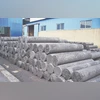 "Graphite India, HEG")
Emkay Global Financial Services on the Indian graphite electrode sector
Listen to This Article
Emkay Global Financial Services has turned bullish on the Indian graphite electrode sector, citing that the sector is in a “Darwinian reset”— a deep slump is driving consolidation, exposing high-cost players, and reshaping supply.
The brokerage has initiated coverage on Graphite India and HEG, assigning 'Buy' rating with target of ₹700 to each, assuming them to be structural winners. Graphite India, according to Emkay, has strong balance sheet, conservative capital approach, steady cost structure—built to endure a prolonged downturn. Lower “beta,” but higher resilience. HEG, on the other hand, has more operating leverage—more volatile in the trough, but potentially more upside if supply tightens and the cycle turns.
“Graphite India and HEG are well-positioned to lead the next global cycle—one that is forming through China’s anti-involution shift, Europe’s Carbon Border Adjustment Mechanism (CBAM) rollout, and a globally coordinated policy resolve aimed at lifting the steel industry out of a prolonged downturn through rising protectionism,” Emaky said.
Why is Emkay upbeat on the graphite electrode sector?
Industry likely to reshape
Emkay believes that after five years of falling graphite electrode (GE) prices, inconsistent procurement economics, and intermittent shutdowns, the industry is reshaping itself—not through expansion, but by subtraction. High-cost capacity is retreating, and balance sheets are being classified into two types: those that can sustain during cyclical troughs and those that cannot.
Also Read

 "Stock Market LIVE, December 12, 2025")
 "The country's largest hotel chain is expanding to double its portfolio of hotels to over 700 hotels.")
 "Vedanta share price")
 "Motilal Oswal on top wealth generators")
 "Indoco Remedies share")
As the weak retreat, competition is narrowing, setting up a more resilient supply base. The next upcycle is likely to reward not the biggest producers, but the most durable—firms with cost discipline, customer qualifications, and financial strength—typical of what’s seen near the bottom of commodity cycles, when sentiment is worst, but fundamentals start to improve, noted Emkay.
Demand isn’t the issue; decarbonisation is
Electric arc furnace (EAF) steelmaking is rising slowly and unevenly, but the direction is hard to reverse because policy support, scrap economics, and decarb pressures all point the same way. Around 110 mt of new EAF capacity is being built (about 15 per ceny of current capacity), which could add roughly 150 kt of GE demand against an existing 650 kt ex-China market. The timing of the upturn can be debated, but the direction can’t, reckons Emkay.
So the key question shifts from “will demand come?” to “who will survive to supply it?”—how much capacity exists, which players can run through a long trough, and whose balance sheets remain intact by the time recovery arrives. (Disclaimer: View and outlook shared on the stock belong to the respective brokerages/analysts and are not endorsed by Business Standard. Readers discretion is advised.)
More From This Section
 "Hindustan Zinc share price today")
 "Gold")
 "Ashok Leyland")
 "market rally, bulls")
 "Larsen & Toubro, L&T")
Topics : HEG Graphite India graphite electrode companies Emkay Global Financial Services Industry Report BSE Sensex NSE Nifty Nifty50
Don't miss the most important news and views of the day. Get them on our Telegram channel
First Published: Dec 12 2025 | 11:50 AM IST