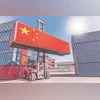
On April 8, Xu Feihong, Chinese ambassador to India, posted on X: “Glad to know that China has become India’s largest trading partner in FY2026 — for the 11th straight month.” This was great news for China but not for India. The $151.1 billion trade between the two comprised $131.63 billion of exports from China to India and a meagre $19.47 billion of imports from India. It was a one-way street. China was flooding Indian markets even as it became India’s “largest trading partner”.
These two pieces of information on trade and investment tell us how asymmetric China-India economic relations are. India makes minor tweaks to its FDI rules while China doubles down on its exports. India must import electronics and electrical equipment ($40 billion-50 billion), machinery ($27 billion), organic chemicals ($12 billion-13 billion), plastics, steel, medical equipment, and so on from China every year. These are critical products without which the Indian economy would not be able to function. Alternative sources exist for some, but at a much steeper price. Moreover, China has diversified its supply sources, so even if not directly from it, Chinese goods would still reach India through Southeast Asian and other manufacturing bases.
With a cumulative overseas investment stock of $3 trillion-3.5 trillion and annual outflows in the range of $160 billion-190 billion, China is a major FDI player across every region. Asia absorbs close to 70 per cent of China’s outward investment stock — roughly $2 trillion-2.2 trillion — largely into Southeast Asia, where Chinese firms have transplanted entire manufacturing ecosystems, particularly in electronics, textiles, electric vehicles, and intermediate goods. Latin America is the second major destination, with a cumulative Chinese investment estimated at $300 billion-500 billion. Europe, while smaller in share, has still absorbed between $100 billion and $200 billion. Africa, though accounting for a smaller share — perhaps $50 billion–100 billion — occupies a strategic position. West Asia, meanwhile, has attracted multi-billion-dollar annual investment in energy, petrochemicals, and, increasingly, renewables.
Chinese FDI in India amounts to a trivial $2.51 billion, or 0.32 per cent of India’s cumulative equity inflows, since 2000. Even if one broadens the definition to include venture-capital investment and indirect flows routed through third countries, the total rises only to $15 billion-20 billion. The reason is simple: India cannot make up its mind whether it wants Chinese FDI, which it suspects could undermine its sovereignty and weaken its self-sufficiency plank. China’s outward investment is frequently intertwined with industrial and geopolitical objectives. Dependence in critical sectors — whether batteries, telecom equipment, or active pharmaceutical ingredients — can translate into vulnerability, especially in periods of geopolitical stress. But caution, hesitancy, and irrelevant policy tweaks are not a policy option. The real option is to learn from the Chinese themselves how they handled FDI.
Beginning in the 1990s and accelerating through the 2000s, China actively courted FDI and technology, particularly from Japan, the United States, and Europe, in a period known as “reform and opening up” (gaige kaifang). China did not see foreign capital as a threat; it saw it as an instrument of transformation if the state retained strategic control over direction. Multinationals were often required to form joint ventures, localise production, and, in many cases, transfer technology — the phrase “bring it in” (yin jin lai) capturing this mindset. To take full advantage of this, special economic zones provided infrastructure, policy stability, and export incentives, enabling China to integrate into global manufacturing networks and develop deep supplier ecosystems, skilled labour pools, and process expertise. China used this phase to absorb technology, build domestic champions, and gradually move up the value chain, eventually becoming both an exporter and an investor in the next phase — “go out” (zou chu qu). Before China, Japan and Germany had demonstrated a similar strategy of importing foreign technology, absorbing it, and becoming world champions.
What India needs to do is build a system in which firms, finance, and the state all pull in the same direction — towards production, technology, scale, and competitiveness, regardless of the source of FDI. But even before that, there must be clarity of objective. India often tries to pursue multiple goals simultaneously — self-reliance, export growth, domestic champions, revenue maximisation, and low consumer prices — without clearly ranking them. Successful industrialisers made a clear choice: Production capability first. When will India do this?
The writer is cofounder of www.moneylife.in and a trustee of the Moneylife Foundation; @Moneylifers


 "China, Trade exports, Trade growth")