Tuesday, February 03, 2026 | 10:27 PM ISTहिंदी में पढें
Business Standard
Notification Icon
userprofile IconSearch

Patience over retaliation: India's long game with Trump has paid off

India and the US have entered a new phase in their relationship, marked by greater parity
Modi Trump
premium

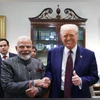
Prime Minister Narendra Modi with US President Donald Trump. (Photo: X/@NarendraModi)

Harsh V PantVivek Mishra

Listen to This Article

The Donald Trump administration is often viewed as a presidency that elevated global anxiety, leaving countries on edge, particularly over tariffs, threats, and, most unsettlingly, uncertainty. India, however, largely succeeded in blunting the sharper edges of America’s tariff weaponisation. It avoided retaliation, maintained resilient economic growth, and adopted a deliberately restrained, if frustratingly reticent, approach to the provocations emanating from Washington. In hindsight, this strategy proved useful. Despite the asymmetric economic relations between the United States (US) and India, the anticipation around striking a trade deal appeared more acute in Washington than in New Delhi. That said, the prolonged absence of a trade deal was not without costs. It carried clear economic disadvantages for India, particularly in sectors heavily dependent on exports to the US. 
Beyond sentiment, the trade deal carries undeniable economic significance, underpinned by the interaction between the world’s largest economy and a buoyant fourth-largest one. The revised tariff rate of 18 per cent could spur significant economic activity between the two countries and re-energise sectors such as textiles, auto components, gems and jewellery, and other key areas of bilateral trade. However, the political significance of the US-India trade deal is even more consequential bilaterally, regionally, and globally. 
At a bilateral level, the deal closes the loop on a rather sordid phase in India-US relations, during which Mr Trump’s intransigence spilled over into both political and economic domains. Symbolically, the agreement marks a political turnaround, which is particularly welcome from New Delhi’s perspective, given Washington’s sudden regional and global reorientation. While India and the US were negotiating the trade deal, global developments moved rapidly, often creating the impression that the Trump administration had other priorities. 
At least four developments signalled a political shift in Washington, which appeared unfavourable to India. The first was the adoption of a nakedly mercantilist approach to a relationship not traditionally framed in such terms, catching India off guard before it recalibrated. Reciprocal tariffs of 25 per cent were widely seen as excessive and interpreted as a deliberate attempt to force Indian concessions. Second came an additional 25 per cent in punitive tariffs imposed on India for purchasing Russian oil — an especially severe move, given that India had no direct stake in the Russia-Ukraine war, yet became a convenient intermediary through which pressure on Moscow was intensified. Third, US policies in India’s neighbourhood began to diverge from past patterns, particularly in Washington’s engagement with Pakistan. To be fair, while there appeared to be an uptick in US-Pakistan ties, this did not translate into concrete harm to Indian interests. Broadly, the shift seemed driven by American economic considerations and regional strategic positioning. Finally, the trade standoff created space for the cultivation of anti-Indian sentiment in the US, which at times fed into the broader conservative and nativist currents gaining ground domestically. 
Against this backdrop, the announcement of the trade deal and the ambitious promise of $500 billion in bilateral trade, even in the absence of a clear timeline, mark a significant turning point. For both countries, the agreement could galvanise the relationship’s other aspects that had been placed on the back burner. The long-delayed Quad meeting, for instance, now carries renewed political legitimacy, something that would have been harder to sustain in the absence of a trade breakthrough. The Quad meeting, under India’s chair ship, would also provide the requisite to the Indo-Pacific strategy and regional balancing. The Trump administration’s strategy documents — the National Security Strategy and the National Defense Strategy  — already seemed anchored in a commitment to the Indo-Pacific, although with a caveat that regional partners will have a greater sharing of the burden. Although a lot could depend on how India wants to steer its Indo-Pacific commitments, the support from Washington could provide strong scaffolding.
 
Staying the course in India-US relations appears to have paid dividends. Three distinct strands emerge from this episode. First, India and the US have entered a new phase in their relations, one in which entrenched asymmetry is gradually giving way to greater parity. Second, the tariff episode prompted India to reassess trust and pursue a strategy of soft balancing through internal economic and labour reforms, as well as diversified external partnerships. Finally, while the trade deal represents a historic opportunity for India, it also brings challenges, the foremost among them is managing complex great-power relations, particularly with Russia and China. Much will depend on how Washington’s own bilateral relations with these powers evolve.
 
Perhaps the most significant shared challenge for India and the US will be reversing the negative perceptions that took hold during the trade standoff. If the current momentum is sustained, this episode may eventually be remembered as a brief detour rather than a defining rupture in bilateral ties. For India, however, the enduring test will be its ability to manage independent relationships without external spillovers — as the Russia-Ukraine conflict has starkly demonstrated.
 

The authors are, respectively, vice-president and fellow (Americas), Observer Research Foundation
Disclaimer: These are personal views of the writer. They do not necessarily reflect the opinion of www.business-standard.com or the Business Standard newspaper