Thursday, January 29, 2026 | 10:34 PM ISTहिंदी में पढें
Business Standard
Notification Icon
userprofile IconSearch

Withdrawing to the West: US defence strategy raises global concern

America First reshapes US defence priorities, urging allies to secure themselves and raising fresh doubts over Taiwan and Asia's stability as Washington turns inward
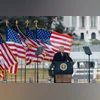
US President Donald Trump speaks during a “Save America Rally” near the White House in Washington on Jan. 6, 2021
premium

US President Donald Trump | File Photo: Bloomberg

Business Standard Editorial Comment Mumbai

Listen to This Article

The United States (US) federal government last week released its National Defence Strategy (NDS), a document that lays out its priorities for the use of force and is usually released once every four or so years. This document closely mirrors the National Security Strategy, or NSS, which was released in early December, and is a further demonstration that President Donald Trump in his second term intends to withdraw the US from much of the role it had taken on in the “old world” for the past 80 years in order to focus on the “new”. The NDS goes further than the NSS in indicating that the US’ erstwhile allies should take on responsibility for their own defence, and further implies essentially that Americans have few interests in conflicts on the other side of the world. Instead, they must focus on the real and lived concerns of the domestic citizens. These include migration and the drug trade, which the current dispensation believes can be controlled by dominating the Western Hemisphere alone. The challenge of China, it concludes, is best dealt with through the demonstration of strength and not through confronting Beijing. It is hard to think that the Chinese leaders will indeed be so impressed by the skill with which the US military deals with the existential threat of Venezuela or some other Latin American nation. 
This is not good news for anyone in Asia other than China. Indeed, Taiwan should be more worried than it was last week, given that the NDS is ominously silent on US policy towards the island. The notion that this is strategic ambiguity can be quickly dismissed. At this point, nobody will believe that the US intends to honour any treaty commitments. It would be more likely to restore strategic ambiguity if the document had in fact reiterated the traditional US posture on Taiwan. For the US’ other East Asian allies, this is a deeply disturbing turn of events, but not one that is completely unexpected. The Japanese government has already scaled up its rhetoric around Taiwan in an attempt to compensate for the lack of certainty around the US response, for example. For American allies in Europe, many might be hoping by this point, after the Greenland saga and the President’s attitude to Ukraine, that Washington pays less attention to their continent. Their own production of weapons will take a decade to ramp up to full potential, but already one German company, Rheinmetall, is producing enough artillery shells to match US production. 
India is in a unique position. It has long been the beneficiary of concern in Washington about China’s rise. Supporting India’s rise in turn seemed to be a low-effort, high-benefit strategy for any US administration, and that is why it became bipartisan policy. But not only has India’s military modernisation not lived up to expectations two decades ago and the economic gap between India and China widened significantly, but with the US’ withdrawal to the Western Hemisphere the very purpose it had for engagement with India has now been lost. New Delhi must come to terms with the fact that it will now be dealing not just with an impatient, anxious, distrustful, or hostile Washington, but with one that is even worse from its perspective: Completely indifferent.