


Delhi's air quality worsens as AQI climbs to 331, Grap II curbs enforced
Jahangirpuri records an AQI of 449, while Noida crosses 300; CAQM has invoked Stage II of Grap across Delhi-NCR

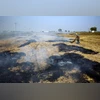
Delhi's AQI rose to 331 on November 3, with eight stations recording severe pollution. GRAP Stage 2 curbs are now in force across Delhi-NCR. (Photo: AdobeStock)
Listen to This Article
Delhi's air quality deteriorated further on Tuesday, with the city-level Air Quality Index (AQI) rising to 331 at 7 am from 307 on Monday morning, remaining in the ‘very poor’ category, according to the Central Pollution Control Board's (CPCB's) real-time data. PM2.5 was the prominent pollutant in the capital.
The deterioration was widespread across the city. Of the 58 monitoring stations with valid readings, 57 recorded AQI levels above 200, while 41 reported readings above 300. Eight locations crossed the 400 mark, entering the ‘severe’ category.
Jahangirpuri recorded the highest AQI at 449, followed by Rohini at 429, Punjabi Bagh at 424, Alipur at 413 and Vivek Vihar at 410. Bawana recorded 408, Delhi Technological University (DTU) 407 and Narela 406. The lowest reading was at IGNOU-Maidan Garhi, where the AQI stood at 195.
Pollution levels were also elevated across neighbouring cities. Noida recorded an AQI of 307, followed by Manesar at 302, while Gurugram stood at 284. Ghaziabad recorded 259, Greater Noida 213 and Faridabad 111. Noida and Manesar were in the ‘very poor’ category, while Delhi, Gurugram, Ghaziabad and Greater Noida were also reporting high pollution levels. Faridabad remained in the ‘moderate’ category.
Under the CPCB's National Air Quality Index classification, readings between 201 and 300 are categorised as ‘poor’, 301-400 as ‘very poor’ and 401-500 as ‘severe’. Prolonged exposure to very poor air can cause respiratory illness, while severe air quality can affect even healthy people and seriously impact those with existing respiratory or cardiovascular conditions.
Also Read



The national picture showed Gajraula in Uttar Pradesh recording the highest AQI among the 272 cities with valid readings in the CPCB dataset, at 399. Delhi and Khora in Uttar Pradesh followed at 331 each, while Kaithal in Haryana recorded 330. Baraut in Uttar Pradesh stood at 310, followed by Noida at 307 and Hapur at 306.
At the other end of the spectrum, Amaravati in Andhra Pradesh recorded the lowest AQI at 18, followed by Madikeri in Karnataka at 19 and Gangtok in Sikkim at 23. Nayagarh in Odisha recorded 24, while Chikkamagaluru in Karnataka stood at 25. These cities were in the ‘good’ category.
The latest deterioration comes a day after the Commission for Air Quality Management (CAQM) invoked Stage II of the Graded Response Action Plan (Grap) across Delhi-NCR with immediate effect. The decision was taken on Monday after Delhi's AQI reached 324 at 4 pm, entering the ‘very poor’ category. The commission cited unfavourable meteorological conditions and forecasts by the India Meteorological Department and the Indian Institute of Tropical Meteorology that air quality was likely to remain in the ‘very poor’ category over the coming days.
Under Stage II, agencies have been directed to intensify mechanised and vacuum-based road sweeping, increase water sprinkling with dust suppressants and deploy anti-smog guns, particularly along heavy-traffic corridors and congestion points. The measures also include higher parking fees to discourage private vehicle use, staggered timings for public offices and municipal bodies, and stricter enforcement of restrictions on diesel generator sets.
Resident welfare associations have also been asked to provide electric heaters to security and other staff to discourage open burning during winter. Public transport services are to be strengthened to encourage commuters to shift away from private vehicles.
Stage II measures are in addition to those under Stage I, which include dust-control measures at construction sites, regular lifting of municipal and construction waste, and action against open burning.
The escalation comes even as the expanded winter pollution-control restrictions took effect in Delhi from November 1. These include restrictions on the entry of non-BS-VI petrol and diesel vehicles registered outside the capital, with exemptions for electric and CNG vehicles and other specified categories. The 'No PUC, No Fuel' rule has also been enforced, requiring vehicles to carry valid Pollution Under Control certificates.
More From This Section


Topics : BS Web Reports Delhi air quality air pollution
Don't miss the most important news and views of the day. Get them on our Telegram channel
First Published: Nov 03 2026 | 8:10 AM IST