


Chinese scientists discover mysterious bacteria on Tiangong space station
Chinese scientists have named the new bacterial species 'Niallia tiangongensis' found in surface samples from the Tiangong Space Station. They could be useful in environments with limited nutrients
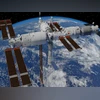 "Chinese scientists found mysterious bacteria on Tiangong Space Station")
Chinese scientists found mysterious bacteria on Tiangong Space Station
Listen to This Article
On board the Tiangong space station, Chinese researchers have identified a new kind of bacteria. The new microbe strain, officially known as Niallia tiangongensis, was discovered in microbial samples taken from the surfaces of the Tiangong during the Shenzhou 15 crewed mission, which returned to Earth in June 2023, according to a paper published in the International Journal of Systematic and Evolutionary Microbiology.
According to descriptions, the new microorganism is a rod-shaped, aerobic bacterium that forms spores. On board Tiangong, a three-module space station in low Earth orbit, a new microbial species has been found for the first time.
Chinese researchers found mysterious bacteria: About the Mutations
According to the study, the bacteria is identical to the terrestrial species Niallia circulans. However, scientists found that the space strain had important genetic differences. The mutations can help scientists understand the evolution of bacteria beyond Earth.
The bacterium exhibits a unique ability to break down gelatine, a trait that could support microbial life in nutrient-poor or extreme environments. Two proteins in Niallia tiangongensis experienced structural and functional changes, according to the study. These changes may improve the bacterium's ability to form biofilms, respond to oxidative stress, and repair radiation damage.
Chinese found mysterious bacteria: Is it helpful in future?
According to scientists, this research suggests how bacteria survive in space. It is currently unknown if astronauts' health might be at risk due to this new strain. However, research into these microbes is essential for both mission security and space sanitation. By monitoring microbiological life on spacecraft, unintended contamination is avoided.
The discovery of new microbes in space is not unprecedented. The strains of new bacteria had also been identified from the International Space Station (ISS), which the scientists say would be helpful in growing crops on Mars. According to a recent study, 26 new bacterial strains were found in NASA clean rooms, which are among the world's most sterile settings.
More From This Section

 "Apple iPhone 16 Pro Max")
 "SynthID Detector")

 "Windows in Android's desktop mode")
 "Android 16 (Image: Google)")
Don't miss the most important news and views of the day. Get them on our Telegram channel
First Published: May 22 2025 | 3:04 PM IST