


Samsung Galaxy XR: Here is how it stacks up against Apple Vision Pro M5
Samsung's maiden Galaxy XR headset takes on Apple's Vision Pro with a lighter design, Gemini AI features, and native Netflix and YouTube support. Here's how they compare to each other
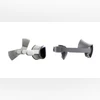 "Apple Vision Pro M5 and Samsung Galaxy XR")
Apple Vision Pro M5 and Samsung Galaxy XR
Listen to This Article
Samsung has officially entered the extended reality race with the launch of its Galaxy XR headset, built in collaboration with Google and Qualcomm. The device immediately draws comparisons with Apple’s Vision Pro, which recently got updated with the Apple M5 chip.
While Apple continues to push its tightly integrated visionOS ecosystem, Samsung is betting on Google’s Android XR and deeper AI integration via Google’s Gemini to make spatial computing more intuitive and useful. From design and comfort to performance, display quality, and battery life, here’s how the Galaxy XR stacks up against the Vision Pro, and where each headset pulls ahead.
How is the Galaxy XR headset different from Apple Vision Pro
Samsung’s Galaxy XR headset shares a lot with Apple’s Vision Pro, including high-resolution Micro-OLED displays, passthrough cameras, and a fully immersive mode for gaming and video playback. It is powered by the Qualcomm Snapdragon XR2+ Gen 2 chip, while Apple’s headset now uses the newer M5 chip.
While both headsets target the same premium audience, Samsung holds an advantage in content support. The Galaxy XR comes with native Netflix and YouTube apps, two key platforms still missing from Apple’s ecosystem. Google has also confirmed that many standard Android apps designed for phones and tablets will work on the Galaxy XR even if developers haven’t built dedicated Android XR versions.
Also Read

 "Samsung Galaxy XR headset")
 "Samsung's Galaxy XR Headset")
 "Tech Wrap October 21")
 "(L-R) Samsung Galaxy S25 Ultra, Samsung Galaxy S25 Plus, and Samsung Galaxy S25")
 "Tech Wrap October 20")
Apple, for its part, offers similar compatibility for iOS and iPadOS apps, but the list of native visionOS apps has not grown beyond a handful.
Where the Galaxy XR really leans ahead is AI integration. The headset gets several Google Gemini-powered features such as Circle to Search using which users can circle real-world objects with their finger to instantly get details or shopping links.
Like Apple’s headset, the Galaxy XR uses an external battery pack, though it doesn’t feature the Vision Pro’s animated “eye” display that mimics the wearer’s gaze. And while Apple allows users to dynamically adjust immersion levels between real and virtual environments, Samsung keeps things simpler with two distinct options: full passthrough or full VR. Multitasking also mirrors Apple’s visionOS, letting users stream videos or browse the web alongside other apps.
Samsung’s headset is notably lighter, weighing about 545g compared to the Vision Pro’s 750–800g depending on the chosen headband. The Galaxy XR includes nose cushions, removable light seals, and a manual adjustment knob to fine-tune the fit. Apple’s updated M5 version of the Vision Pro, meanwhile, introduces a redesigned dual-knit band and a Fit Dial for precision adjustment.
Here is a specification-based comparison between the two headsets:
Display
Samsung’s Galaxy XR uses a Micro-OLED panel with a resolution of 3,552 × 3,840 pixels per eye, delivering roughly 29 million total pixels — higher than the Vision Pro’s 23 million-pixel Micro-OLED display. The Galaxy XR also offers broader colour accuracy with 96 per cent DCI-P3 coverage, slightly ahead of the Vision Pro’s 92 per cent (with the M5 model).
However, Apple’s headset supports a wider range of refresh rates — 90 Hz, 96 Hz, 100 Hz, and 120 Hz — offering smoother motion and more flexibility depending on the content. Samsung’s display caps out at 90 Hz, with selectable modes for 60 Hz and 72 Hz.
Camera and sensors
When it comes to imaging and tracking, both the Galaxy XR and Vision Pro are evenly matched. Each headset includes a 6.5-megapixel main camera with an 18 mm lens and f/2.0 aperture for recording 3D photos and videos with spatial depth.
Alongside that, both feature dual passthrough cameras, six external tracking cameras for hand and gesture recognition, four internal cameras for eye-tracking, a depth sensor (with Apple opting for a LiDAR scanner), and a flicker sensor. Samsung’s headset includes five inertial measurement units (IMUs), compared to Apple’s four, while the Vision Pro adds an ambient light sensor that the Galaxy XR lacks.
Both devices also incorporate iris-based biometric authentication. On Samsung’s headset, it’s used to unlock the device or log into supported apps. Apple extends this feature to authorise App Store or iTunes purchases.
Battery
Battery life differs slightly between the two. Samsung claims the Galaxy XR lasts up to two hours for general use and around two-and-a-half hours during continuous video playback. Apple says the M5-powered Vision Pro can stretch that to two-and-a-half hours of general use and as much as three hours for video playback.
Both companies allow users to continue using their headsets while they’re charging, ensuring uninterrupted sessions during work or entertainment.
Processor and platform
Under the hood, Samsung’s Galaxy XR runs on Qualcomm’s Snapdragon XR2+ Gen 2 chip paired with 16 GB RAM and 256 GB storage. It operates on Google’s new Android XR platform, which Samsung says can run nearly all standard Android apps out of the box.
Apple’s Vision Pro, meanwhile, is powered by the company’s latest M5 chip and runs on visionOS — an operating system optimised for spatial computing with broad support for iPadOS and iOS apps.
Storage options also set them apart: the Galaxy XR comes in a single 16 GB RAM + 256 GB storage variant, whereas Apple offers the Vision Pro in 256 GB, 512 GB, and 1 TB storage configurations.
Price
- Samsung Galaxy XR: $1,799 onwards
- Apple Vision Pro (M5): $3499 onwards
Samsung Galaxy XR: Specifications
- Display: Micro-OLED, 3,552 × 3,840 resolution, 27 million pixels, 60–90Hz refresh rate
- Processor: Qualcomm Snapdragon XR2 Plus Gen 2
- RAM: 16GB
- Storage: 256GB
- Operating system: Android XR
- Camera: 6.5MP
- Sensors: 2 pass-through, 6 world-facing, 4 eye-tracking, 5 IMUs, 1 depth, 1 flicker
- Battery: 2 hours normal use, 2.5 hours video playback
- Connectivity: Wi-Fi 7, Bluetooth 5.4
- Weight: 545g (headset), 302g (battery)
Apple Vision Pro: Specifications
- Display: 3D display system, micro-OLED panel, up to 120Hz refresh rate
- Storage: Up to 1TB
- Chip: Apple M5
- Sensors: Two high-resolution main cameras, six world-facing tracking cameras, four eye-tracking cameras, LiDAR Scanner, four inertial measurement units (IMUs), flicker sensor, ambient light sensor
- Battery: Up to 2.5 hours of general use, up to 3 hours of video playback
- Connectivity: Wi-Fi 6 (802.11ax)
- Bluetooth: 5.3
- Operating system: visionOS 26
- Weight: 750–800 grams
More From This Section
 "WhatsApp")
 "youtube")
 "artificial intelligence, large language model, LLM")
 "Meta")
 "iPad Pro M5 (13-inch, 11-inch)")
Topics : Samsung Galaxy Apple Mixed Reality handset
Don't miss the most important news and views of the day. Get them on our Telegram channel
First Published: Oct 22 2025 | 4:24 PM IST