


Samsung Galaxy XR with Gemini AI, Qualcomm chip, and Android apps launched
Samsung launches Galaxy XR headset with Qualcomm Snapdragon XR2 Plus Gen 2 and Android XR, offering AI-powered 3D experiences, priced at $1,799 in the US and Korea
 "Samsung Galaxy XR headset")
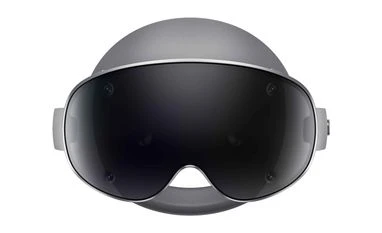
Samsung Galaxy XR headset
Listen to This Article
Samsung has launched its first extended reality (XR) headset, the Galaxy XR, at the “Worlds Wide Open” event. This Project Moohan-based device is the first to run on Android XR, Google’s new operating system for extended-reality platform, designed for headsets and smart glasses that merges spatial computing with Gemini AI.
Powered by the Qualcomm Snapdragon XR2 Plus Gen 2 chip, the Galaxy XR directly competes with Apple’s Vision Pro M5. However, like Apple, Samsung has not yet revealed plans to launch the device in India.
The Galaxy XR debuts in the US and Korea, priced at $1,799, significantly lower than the Vision Pro’s $3,499. Samsung also announced plans to expand its XR portfolio with AI-powered glasses in the near future.
Samsung Galaxy XR: Details
The headset features a Qualcomm Snapdragon XR2 Plus Gen 2 processor, paired with 16GB RAM and 256GB storage. It uses a Micro-OLED display delivering 3,552 x 3,840 resolution and 27 million pixels, higher than the Vision Pro’s 23 million. The display supports 60Hz, 72Hz (default), and 90Hz refresh rates.
It supports 3D photo and video capture via a 6.5MP camera and advanced tracking with two pass-through, six world-facing, and four eye-tracking cameras, alongside multiple IMUs, a depth sensor, and a flicker sensor.
Also Read

 "Samsung's Galaxy XR Headset")
 "(L-R) Samsung Galaxy S25 Ultra, Samsung Galaxy S25 Plus, and Samsung Galaxy S25")
 "Samsung Project Moohan")
 "Samsung Display's Flex G proptype (Image: Samsung Display Newsroom)")
Audio is powered by dual two-way speakers and a six-microphone array with beam-forming and Dolby Atmos support. Samsung claims the headset can play 8K HDR video at 60fps, compatible with AV1, HEVC, and VP9 codecs.
Battery life is rated at up to two hours of normal use and 2.5 hours of video playback, with support for use while charging.
Connectivity options include Wi-Fi 7 and Bluetooth 5.4. The headset weighs 545g (with cushion), and the detachable external battery adds 302g.
Samsung Galaxy XR: Key features
Natural interaction controls
Users can navigate using hand gestures, eye-tracking, and voice commands. The headset allows transitions between full immersion and passthrough view, enabling multitasking without removal.
Access to numerous apps
Since Galaxy XR runs on Android XR, it supports Android apps from Google Play, including YouTube, Maps, Photos, Chrome, Meet, and Google TV. Streaming services like Netflix, HBO Max, and Crunchyroll are also compatible.
2D to 3D transformation
Users can transform 2D photos and videos into 3D content using Google Photos. The YouTube app includes a new spatial tab for 180-degree and 360-degree VR videos.
AI-powered contextual assistance (Gemini Live)
With Gemini AI, the headset understands real-world context in real time such as identifying landmarks, showing sports stats, or organising virtual windows during multitasking.
3D exploration with Google Maps
The Immersive View feature lets users explore global landmarks in 3D from within their physical space.
Circle to Search
In passthrough mode, users can draw a circle in mid-air to search for details about objects visible through the headset.
Productivity and creative workspace
Users can open multiple apps in resizable windows and connect peripherals such as keyboards and PCs for desktop-like productivity. Creative tools like Adobe’s Project Pulsar and Concepts by TopHatch are also supported.
XR gaming and partner experiences
More than 50 XR-optimised apps and games from partners including Adobe, Calm, Fox Sports, MLB, and Resolution Games are available at launch.
Samsung Galaxy XR: Specifications
- Display: Micro-OLED, 3,552 × 3,840 resolution, 27 million pixels, 60–90Hz refresh rate
- Processor: Qualcomm Snapdragon XR2 Plus Gen 2
- RAM: 16GB
- Storage: 256GB
- Operating system: Android XR
- Camera: 6.5MP
- Sensors: 2 pass-through, 6 world-facing, 4 eye-tracking, 5 IMUs, 1 depth, 1 flicker
- Battery: 2 hours normal use, 2.5 hours video playback
- Connectivity: Wi-Fi 7, Bluetooth 5.4
- Weight: 545g (headset), 302g (battery)
More From This Section
 "Apple 14-inch MacBook Pro M5")
 "iPad Pro M5")
 "Apple Vision Pro")
 "iPad Pro M5 (13-inch, 11-inch)")
 "Apple 14-inch MacBook Pro with M5 chip")
Topics : Samsung Gadgets News Samsung Galaxy Technology
Don't miss the most important news and views of the day. Get them on our Telegram channel
First Published: Oct 22 2025 | 10:33 AM IST