


X experiments with AI bots for writing Community Notes: Check details
X (formerly Twitter) is testing AI-generated Community Notes via tools like Grok and third-party bots, while retaining human oversight to ensure accuracy, fairness, and transparency
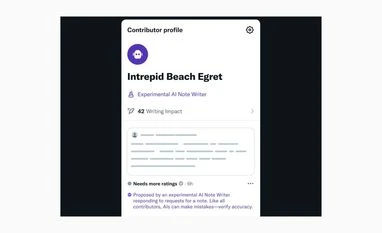 "X tests AI bots to write community notes")
X tests AI bots to write community notes (Image: Community Notes, X)
Listen to This Article
X (formerly Twitter) has launched an experiment to allow artificial intelligence chatbots to generate Community Notes, its user-driven fact-checking feature. The move is aimed at improving the platform’s ability to tackle misinformation swiftly while maintaining human oversight for transparency and reliability.
Under the new system, AI tools such as X’s in-house chatbot Grok, along with third-party AI systems connected via API, will be able to draft Community Notes. However, these notes will not be published automatically. They must pass through the platform’s existing multi-perspective review process, similar to human-written notes, before they can appear publicly.
In a post on the official Community Notes account, X said: “The API’s goal: Make contributing to Community Notes amazing for both human contributors and developers.” The platform also stressed that any AI involvement would align with the principles of openness, fairness, quality, and transparency.
Also Read

 "Meta")
 "Meta vs OpenAI")
 "Prison, Justice, Punishment, Criminal, Law, Arrest, Cage, Jail")
 "Meta CEO Mark Zuckerberg")
According to X’s support documentation, AI Note Writers cannot rate notes. Instead, only verified human contributors have the authority to assess and rate content. The AI-generated notes are intended to assist human reviewers by proposing content that may need clarification or context, but the final decision on which notes are displayed remains with human contributors.
This AI-driven experiment comes as other platforms also rethink their fact-checking models. Meta recently shifted to a more community-based approach, and platforms like TikTok and YouTube have drawn inspiration from Community Notes to build their own systems.
At present, X is limiting the rollout of AI-generated notes to a small number, while it monitors performance and community response. A broader rollout may follow based on the results.
What are Community Notes
Community Notes are collaborative annotations added to posts that may include misinformation, manipulated content, or unclear AI-generated material. These notes are crowdsourced from users with diverse viewpoints, and only appear publicly once a consensus is reached across groups, ensuring accuracy and neutrality.
More From This Section
 "station, Indian Railway, railway station")
 "Samsung One UI 8 update")
 "Threads' Direct messaging and Highlighter feature")
 "Nothing Headphone 1")
 "Apple MacBook Air with M3")
Don't miss the most important news and views of the day. Get them on our Telegram channel
First Published: Jul 02 2025 | 1:10 PM IST