


AstroForge: Earth's first asteroid mining prospector heads to launchpad
That may sound familiar: A decade ago, news stories were aflutter about the wealth promised by asteroid mining companies. But things didn't quite work out
 "Photo: X/ @astroforge")
Photo: X/ @astroforge
Listen to This Article
By Jonathan O’Callaghan
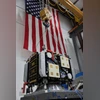
A private company is aiming to heave a microwave oven-size spacecraft toward an asteroid later this week, its goal to kick off a future where precious metals are mined around the solar system to create vast fortunes on Earth.
“If this works out, this will probably be the biggest business ever conceived of,” said Matt Gialich, the founder and chief executive of AstroForge, the builder and operator of the robotic probe.
That may sound familiar: A decade ago, news stories were aflutter about the wealth promised by asteroid mining companies. But things didn’t quite work out.
“We blossomed three or four years too early for the big gold rush of investor enthusiasm for space projects,” said David Gump, the former chief executive of Deep Space Industries, one of the earlier batch of would-be asteroid miners. Eventually the money dried up; Deep Space Industries was sold off in 2019 and never reached an asteroid. AstroForge is betting on things being different this time around. The California company has already launched a demonstration spacecraft into Earth orbit and raised $55 million in funding. Now the company is set to actually travel toward a near-Earth asteroid in deep space.
Also Read

 "asteroid")
 "Asteroid Bennu")
 "Asteroid Bennu")
 "Nasa looks at asteroids to mine for metals")
AstroForge’s second robotic spacecraft, called Odin, is bundled into a SpaceX Falcon 9 rocket that will also launch a privately built moon lander and a Nasa-operated lunar orbiter as soon as Wednesday from Florida. About 45 minutes after the launch, Odin will separate and begin its solo journey into deep space, while the moon missions — the Athena lander from Intuitive Machines and Nasa’s Lunar Trailblazer — take off on their own separate journeys. No commercial company has ever launched an operational mission beyond the moon, and AstroForge is the first company to receive a license from the Federal Communications Commission that allows it to transmit from deep space. AstroForge will communicate with the spacecraft using undisclosed dishes in India, South Africa, Australia and the United States. “We’re the only one that’s actually doing anything,” he said. “Who else is preparing to go to an asteroid?”
Asteroid 2022 OB5 is small, no more than 330 feet across, about the size of a football field. AstroForge’s science team assessed the asteroid by using telescopes, including the Lowell Observatory and the Large Binocular Telescope in Arizona, to estimate its metallic content. They believe that 2022 OB5 is an M-type, a class of asteroids comprising 5 percent of known space rocks that may have a high amount of metal. The analysis of the asteroid has not yet been published. “There are several different ways to determine whether it’s an M-type or not,” she said, including studying the asteroid’s brightness, or albedo. A higher brightness suggests the presence of more metal. She lauded the company for being more open about its target asteroid.
M-type asteroids are thought to be rich in metals such as iron and nickel. These could be useful as a resource for construction in space, perhaps to build new spacecraft and machinery. However, some M-types may also be rich in more valuable platinum group metals, or P.G.M.s, used in devices such as smartphones.
More From This Section
 "Tesla CEO and X owner Elon Musk")
 "Donald Trump, Trump")
 "Vladimir Putin, putin, Xi Jinping, Jinping, China President")
 "A sharp fall in global crude benchmarks will reduce costs of fuel, both oil and gas, to Indian consumers if State-run oil companies choose to pass them on")
 "Pope Francis")
Topics : Asteroid NASA Space startup
Don't miss the most important news and views of the day. Get them on our Telegram channel
First Published: Feb 24 2025 | 10:45 PM IST