


China to assemble 'Planetary Defence Force' to tackle asteroid 2024 YR4
Candidates with master's in astrophysics, aerospace science, or earth and space exploration technology are eligible-on one condition: a firm allegiance to the Chinese Communist Party and its ideology
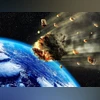 "asteroid")


Listen to This Article
With the risk of the 300-foot asteroid 2024 YR4 colliding with Earth now doubling, global efforts to counter the potential threat are gaining momentum.
China is reportedly establishing a ‘planetary defence force’ and it has already started the hiring process for this role after assessing the risk of the space rock that could conceivably hit Earth in 2032.
According to The Guardian, China's State Administration of Science, Technology and Industry for National Defence (SASTIND) is inviting applications from ‘young loyal graduates.’
According to a report by The Guardian, job postings on China’s WeChat last week revealed plans to recruit a specialised team dedicated to monitoring near-Earth asteroids and creating advanced early warning systems.
The asteroid 2024 YR4, ranging from 40 to 90 meters in width, could cause devastating local damage if it were to collide with Earth.
Also Read

 "china, china trade, trade")
 "Xi Jinping")
 "Jack Ma, Alibaba")
 "Aurobindo Pharma, Aurobindo Pharma logo")
 "deepseek artificial intelligence")
Who all are ‘eligible’?
Chinese instant messaging app, WeChat, showed ads that these 16 vacancies at SASTIND include three for the new planetary defence force.
The job requires recent graduates (masters or higher), with majors in astrophysics, earth and space exploration technology, and aerospace science and technology.
There is an age limit as well and candidates should be below 35 years of age and should have a 'firm political stance' supporting the ruling Chinese Communist Party (CCP), and candidates' ideology should be aligned with Chinese President Xi Jinping, who leads the CCP.
What is the ‘job description'?
The ads describe that they are looking for a planetary defence force job as a ‘research on monitoring and early warning of near-Earth asteroids.’
The ads also suggest that the key focus is on international cooperation, and designing systems for new and experimental technology.
China’s mission similar to Nasa’s Dart
China unveiled its first near-Earth asteroid defence mission last year that aimed to closely observe the celestial bodies before executing a kinetic impact to alter its trajectory around 2030.
This is very much similar to NASA's Double Asteroid Redirection Test (Dart) that was launched in November 2021. This mission successfully impacted the asteroid Dimorphos in September 2022.
Which asteroid is it?
While there is no mention of the asteroid, the recruitment drive comes amid increasing focus on 2024 YR4, an asteroid which has a low – but rising – likelihood of hitting the Earth in 2032.
According to reports, an asteroid, 2024 YR4, has a low but rising likelihood of hitting the Earth in 2032 and has attracted attention from across the world.
Analysts reported last week that the chances of 2024 YR4 hitting Earth have increased from 1.3 to 2.2 per cent.
The UN’s Space Mission Planning Advisory Group, which includes countries with space programmes (China is part of it), is holding meetings regularly to discuss a response.
More From This Section
 "Keir Starmer, Keir, Starmer, UK")
 "Germany, Germany flag")
 "Marco Rubio")
 "Gold")
 "Anura Dissanayake, Srilanka President")
Don't miss the most important news and views of the day. Get them on our Telegram channel
First Published: Feb 17 2025 | 1:17 PM IST