


Atlantic drops full Signal chat on Yemen attack; White House downplays leak
JD Vance pushes for delay in attack, Pete Hegseth takes final call: What The Atlantic revealed about the Yemen Houthi attack group chat
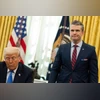 "Pete Hegseth")
US Defense Secretary Pete Hegseth stands by US President Donald Trump, in the Oval Office at the White House, in Washington, DC, US. Photo: Reuters
Listen to This Article
Top US officials, including Secretary of Defense Pete Hegseth, have denied allegations that classified military plans were shared in a private Signal messaging group, following a report by The Atlantic that exposed internal deliberations over a US military operation in Yemen.
Officials also attempted to discredit The Atlantic’s editor-in-chief, Jeffrey Goldberg, calling him “anti-Trump”, “sensationalist”, and a “registered Democrat”. Amid the backlash, Goldberg and his team released the full Signal chat transcript, stating they believed it to be authentic and indicative of a major security lapse.
Who was in the Signal chat?
The private Signal group, labelled “Houthi PC Small Group”, was reportedly created by National Security Adviser Michael Waltz. It included several senior US officials:
- Vice President JD Vance
- Defense Secretary Pete Hegseth
- CIA Director John Ratcliffe
- Secretary of State Marco Rubio
- Director of National Intelligence Tulsi Gabbard
- Treasury Secretary Scott Bessent
- White House Deputy Chief of Staff Stephen Miller
- White House Chief of Staff Susie Wiles
- Special Envoy to the Middle East and Russia Steve Witkoff
What did the messages reveal?
Waltz initiated the conversation, asking officials to prepare coordination efforts over the next 72 hours. He said his deputy, Alex Wong, was assembling a “tiger team” of deputies and chiefs of staff following that morning’s Situation Room briefing.
To strike or not to strike
Vice President JD Vance expressed concerns about proceeding with the strike. “I think we are making a mistake,” he wrote, suggesting that it clashed with the administration’s messaging on Europe and might cause a spike in oil prices. Vance supported a delay of up to a month, though he ultimately deferred to the team’s consensus.
Also Read

 "Karoline Leavitt")
 "Ukraine, Russia, US, America, Donald Trump, Vladimir Putin, Volodymyr Zelenskyy, Ukraine ceasefire, Russia ceasefire, ceasefire")
 "Conor McGregor")
 "Donald Trump, Trump, Volodymyr Zelenskyy, Zelenskyy")
 "Tesla")
CIA Director John Ratcliffe supported the delay, saying additional time would aid intelligence gathering on Houthi leadership. Defense Secretary Pete Hegseth opposed postponement, warning that leaks or an unexpected Israeli strike could force the US to act under less favourable terms.
“We are prepared to execute,” Hegseth wrote. “If I had the final decision, I would say go ahead.” He argued the strike was vital for restoring freedom of navigation and deterring threats. “I fully share your loathing of European freeloading. It’s PATHETIC,” he added.
Timeline of the Yemen strikes
According to the Signal messages, Hegseth outlined the operational schedule as follows:
- 11:44 am (ET): Weather conditions confirmed as favourable
- 12:15 pm: F/A-18 Super Hornets launched from USS Harry S Truman in the Red Sea
- 1:45 pm: First strike window opens, targeting a senior Houthi militant
- 2:15 pm: MQ-9 Reaper drones engage targets
- 3:36 pm: Second wave of airstrikes begins, followed by Tomahawk missile launches
Messages later confirmed that the first target—a senior Houthi commander—was eliminated. Waltz noted that a building collapsed shortly after the individual entered.
“Excellent,” replied Vance.
“A good start,” added Ratcliffe.
“Great work all. Powerful start,” wrote Stephen Miller.
After this Goldberg, convinced the text chain was real, exited from the group chat. The Atlantic stated that aside from redacting the names of CIA officers, no content from the chat was removed.
Hegseth refutes chat authenticity
Following the publication, Hegseth pushed back on social media:
“So, let’s get this straight. The Atlantic released the so-called ‘war plans’ and those ‘plans’ include: no names, no targets, no locations, no units, no routes, no sources, no methods—and no classified information. Those are some really [expletive] war plans. This only proves one thing: Jeff Goldberg has never seen a war plan or an ‘attack plan’ (as he now calls it). Not even close.”
So, let’s me get this straight. The Atlantic released the so-called “war plans” and those “plans” include: No names. No targets. No locations. No units. No routes. No sources. No methods. And no classified information. Those are some really shitty war plans. This only proves…
— Pete Hegseth (@PeteHegseth) March 26, 2025
The White House has not commented further on the publication of the transcript. The leak, however, has intensified debate over transparency, media ethics, and national security in a highly charged election year.
More From This Section
 "elon musk, donald trump, tesla")
 "wildfire")
 "US flag, US, united states")
 "Donald Trump")
 "Elon musk, musk, Elon")
Don't miss the most important news and views of the day. Get them on our Telegram channel
First Published: Mar 27 2025 | 10:00 AM IST