


Losing steam: China's economic slowdown deepens in key August indicators
Factory output, retail sales, and investment weaken in August as deflation risks, job losses, and property slump weigh on China's economy
 "china economy")
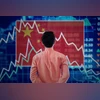
China’s economy slows in August as factory output and demand weaken | Photo: Shutterstock


Listen to This Article
China’s economy slowed in August, with factory output, consumer spending and investment losing momentum.
Data released on Monday by the National Bureau of Statistics showed industrial production rose 5.2 per cent from a year earlier, the weakest pace in 12 months. Retail sales grew 3.4 per cent, missing Bloomberg expectations and slowing from July. Fixed-asset investment, which includes spending on infrastructure, manufacturing and property, increased just 0.5 per cent in the first eight months—the lowest for the period since 2020.
Weak consumer demand and deflationary pressure
Inflation data pointed to persistent weakness in consumer demand. The Consumer Price Index (CPI) fell 0.4 per cent year-on-year in August, led by steep drops in pork (–16.1 per cent) and vegetable (–15.2 per cent) prices. At the factory level, producer prices (PPI) declined 2.9 per cent.
Deflationary pressure raises the risk that falling prices could discourage spending and investment.
Industrial production rose 5.2 per cent in August, a decline from 5.7 per cent in July and 6.8 per cent in June. This was also far below estimates that had pegged growth at 5.7 per cent.
Also Read

 "china, china flag, Politburo")
 "US China, US China flag")
 "china Flag, China")
 "china Flag, China")
 "China, chinese manufacturing, China economy, markets, consumers")
Unemployment continues to grow
The urban unemployment rate climbed to 5.3 per cent in August, up from 5.2 per cent in July and 5 per cent in June.
Property sector under strain
China’s real-estate sector saw the biggest slump, with investment falling 12.9 per cent in the first eight months. Sales of new commercial buildings by floor space declined 4.7 per cent during this period compared with last year, with 573.04 million square metres sold.
Despite the broader slowdown, investment in high-tech and advanced industries grew. Investment in information services jumped 34.1 per cent, while aerospace manufacturing gained 28 per cent.
Exports remain resilient
China’s exports provided some relief, rising 4.8 per cent in August and 6.9 per cent over the first eight months. Mechanical and electrical goods—including semiconductors, machinery and electronics—made up more than 60 per cent of these exports. Imports, however, grew just 1.7 per cent in August and remained down 1.2 per cent for the year to date, pointing to subdued domestic demand.
Trade with Belt and Road partner countries expanded 5.4 per cent.
Why it matters
China’s slowdown comes at a fragile time when the global supply chain has been disrupted following US President Donald Trump’s sweeping tariffs. Europe is also struggling with stagnant growth. If China’s domestic demand remains weak, global supply chains, commodity markets and multinational earnings could all feel the impact.
Countries that export raw materials such as iron ore, copper and soybeans to China—including Australia, Brazil and parts of Africa—could feel the impact of weaker demand. Asian manufacturing hubs integrated into China’s supply chains also face risks if production softens further.
“China’s August data are hardly inspiring—exports remain under tariff pressure while the property downturn continues to weigh on domestic demand,” Charu Chanana, chief investment strategist at Saxo Markets, told Bloomberg News. “Yet markets are shrugging it off, with cash-rich households rotating into equities and AI momentum powering chip stocks higher.”
China’s economic outlook
Despite the August slowdown, China remains on track to meet its annual growth target of around 5 per cent, thanks to stronger-than-expected performance earlier in the year.
The statistics bureau said the government will focus on “keeping employment, businesses, market and expectations stable, and deepen reform and opening up and innovation, so as to foster steady and healthy economic development.”
More From This Section
 "The Brown University campus in Providence, Rhode Island")
 "SoftBank's Son is betting big on OpenAI")
 "OpenAI, chatgpt")
 "Danger, Hack, Hacking")
 "byd, electric vehicle, chinese cars")
Don't miss the most important news and views of the day. Get them on our Telegram channel
First Published: Sep 15 2025 | 9:52 AM IST