


Why China's police plan to build a male DNA bank has raised privacy fears
Police in Xilinhot, Inner Mongolia, sparked controversy after announcing plans to collect men's blood samples to update an identification database for ID cards and passports
 "Blood test")
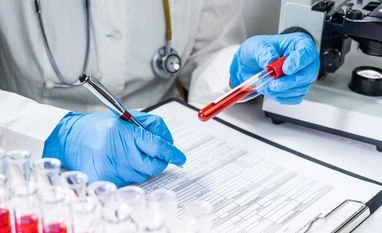
Y-chromosome databases have been used in parts of China since 2007, when the first “Y bank” project began in Zhengzhou, Henan province. (Photo: AdobeStock)
Listen to This Article
A new initiative by police in northern China has drawn widespread attention after plans surfaced to collect blood samples from men to build a “crime-fighting” DNA database, according to a report by South China Morning Post. The proposal, aimed at enhancing identification systems and aiding investigations, has sparked a heated national debate over privacy, consent, and government data handling practices.
Why is DNA being collected?
The controversy began when police in Xilinhot, a city in Inner Mongolia, announced plans to collect blood samples to update an identification database used for ID cards and passports, China Newsweek reported last month. Officials claimed the move would help in “preventing elderly and children getting lost”, while assuring that all personal data and biological material would be “kept strictly confidential".
However, the original announcement could not later be found on the police department’s website or social media accounts. In follow-up interviews, a police officer said participation was “entirely voluntary” and that those who declined would face “no consequences”. The samples, they added, would contribute to a local Y-chromosome DNA database, or “Y bank", the news report said.
What is a Y-chromosome DNA bank?
Y-chromosome databases have been used in parts of China since 2007, when the first “Y bank” project began in Zhengzhou, Henan province. Police in at least 18 provinces have since undertaken similar initiatives.
Also Read

 "Ashley Tellis")
 "Tim Cook, Tim, cook, Apple, Apple CEO")
 "China population")
 "India china, India, China")
 "China-Taiwan drills, China-Taiwan, Taiwan")
This technology, called Y-STR family screening, allows police to identify potential male suspects by examining genetic markers shared among male relatives. Since all men in a family share certain short tandem repeats (STRs) on their Y chromosome, the method helps narrow investigations to specific families before targeting individuals. The approach has been credited with solving major crimes, including the Baiyin serial killings, in which 11 women were murdered between 1988 and 2002.
What are the privacy concerns?
Despite its success in solving cases, the project in Xilinhot has prompted strong concerns. Critics argue that without clear communication and legal safeguards, such data could be mishandled or misused, South China Morning Post reported.
Tian Fang, a law professor at Nanjing University, argued that the technology targets only non-coding DNA, which does not reveal personal traits like eye colour or blood type, and therefore does not invade privacy.
But others disagree. Chen Xuequan, a law professor at the University of International Business and Economics in Beijing, warned of possible misuse. “After the samples are collected, who is in charge of analysing? After analysis, what will they do with it?” he asked, as quoted by the news report. “If they keep the samples, they can analyse anytime and even get more private information out of it.”
Currently, China’s 2015 anti-terrorism law is the only legislation that explicitly mentions collecting biological information such as blood, urine, fingerprints and iris scans. Broader laws mention “personal information” but require collection only with consent.
More From This Section
 "Donald Trump")
 "Trump, Donald Trump")
 "US China flag, US-China flag")
 "israel, hostages, hamas, gaza, palestine")
 "Donald Trump, Trump")
Topics : China DNA profiling DNA bill BS Web Reports
Don't miss the most important news and views of the day. Get them on our Telegram channel
First Published: Oct 16 2025 | 10:03 AM IST