


'Relationship is excellent': Trump confirms trade deal with China finalised
Trump says a trade deal with China has been finalised, with key agreements on rare earth supplies, tariffs, and student visas, pending final approval from both leaders after talks in London
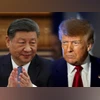 "Xi Jinping, Donald Trump")
United States and China reached an initial understanding on a framework aimed at easing trade tensions between the two largest global economies.


Listen to This Article
US President Donald Trump on Wednesday claimed that a trade deal with China has been finalised, pending final approval from both him and Chinese President Xi Jinping.
In a post on Truth Social, Trump stated, “Our deal with China has been finalised, pending final approval from President Xi and myself. As part of the agreement, China will supply, upfront, full magnets and any necessary rare earth materials.”
He added: “We will be imposing a total of 55 per cent in tariffs, while China will impose 10 per cent. The relationship between our countries is excellent. Thank you for your attention to this matter. In return, the United States will provide what was agreed upon, including allowing Chinese students to study in our colleges and universities—something I’ve always supported.”
Also Read

 "ASML")
 "White House")
 "S Jaishankar, Ursula chief von der Leyen")
 "Elon Musk, Donald Trump")
 "Donald Trump, Greta Thunberg")
Framework reached after London talks
Trump’s remarks come shortly after the United States and China reached an initial understanding on a new trade framework, following two days of high-level discussions in London involving senior officials from both governments.
US Commerce Secretary Howard Lutnick confirmed that the agreement is expected to resolve long-standing trade tensions, particularly over restrictions on rare earth minerals and magnets, which are critical to defence and electronics industries.
Officials said the framework will now be presented to Presidents Trump and Xi for formal approval.
The announcement marks a significant step in easing trade hostilities between the world’s two largest economies, which had intensified over tariffs, technology transfer, and critical material access.
Further details on implementation timelines and the full scope of reciprocal commitments are expected following the final summit between the two leaders.
The earlier Geneva talks had collapsed largely due to China’s export restrictions on essential minerals. In response, the Trump administration introduced its own set of export bans, halting the shipment of semiconductor design tools, aircraft, and other critical goods to China.
A crucial de-escalation
A breakthrough between the two giant economies was much-needed. Following Trump’s “Liberation Day” announcement on April 2, trade between the US and China had virtually frozen. The imposition of a 145 per cent tariff on most Chinese imports made it economically unviable for American companies to source goods from what had long been their second-largest trading partner.
US Treasury Secretary Scott Bessent, who led the US delegation in the negotiations, described the previous tariff structure as “unsustainable.” On May 12, both sides announced plans to scale back their record-high tariffs, marking a turning point in the talks.
This is especially significant considering China’s near-total dominance in the supply of rare earth elements — materials essential for producing everything from cars and jet engines to MRI contrast dyes and certain cancer medications.
More From This Section
 "Erdogan")
 "earthquake")
 "Elon Musk, Donald Trump")
 "Ukraine Crisis")
 "Earth magnetic field, India imports, Imported goods, rare earth magnets")
Don't miss the most important news and views of the day. Get them on our Telegram channel
First Published: Jun 11 2025 | 6:15 PM IST