


Biden defends clemency orders, calls autopen use 'legal and justified'
Former US President Joe Biden defends his clemency decisions and use of the autopen. He also rejected claims by Donald Trump that aides acted on his behalf
 "Joe Biden, autopen")
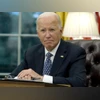
Joe Biden said he personally approved all commutations and pardons, despite not physically signing the documents himself. | File Photo
Listen to This Article
Former US President Joe Biden has defended his end-of-term clemency decisions and dismissed criticism from incumbent President Donald Trump and his allies over the use of an autopen to sign official warrants.
In a phone interview with The New York Times, Biden said he personally approved all commutations and pardons, despite not physically signing the documents himself.
“I made every single one of those. And — including the categories, when we set this up to begin with. And so — but I understand why Trump would think that, because obviously, I guess, he doesn’t focus much. Anyway, so — yes, I made every decision.”
Thousands received sentence reductions
Legal use of autopen defended
Biden clarified the use of the autopen — an authorised mechanical signature tool — as a matter of practicality. “Because there were a lot of them.”
“The autopen is, you know, legal. As you know, other presidents used it, including Trump. But the point is that, you know, we’re talking about a whole lot of people.”
Also Read

 "book review")
 "Joe Biden, Biden")
 "us china, china us, china flag, us flag")
 "trump")
 "Donald Trump, Trump")
Republicans have launched investigations, suggesting Biden’s aides may have acted without authorisation. Mr Trump has labelled the clemency acts “illegitimate”. But Biden rejected these claims outright.
“They’re liars. They know it. They know, for certain. I mean, this is — look, what they, they’ve had a pretty good thing going here. They’ve done so badly. They’ve lied so consistently about almost everything they’re doing. The best thing they can do is try to change the focus and focus on something else. And this is a — I think that’s what this is about.”
“It’s — you know — it’s consistent with Trump’s game plan all along. I mean, if I — I don’t expect you to answer any questions — but if I told you three years ago, we’d have a president doing this, I think you’d look at me in the eye and say, ‘What, are you, crazy?’”
Pre-emptive pardons for family
Acknowledging that he issued pardons to family members, Biden said it was a precautionary measure against politically motivated investigations.
“In terms of my family — he — goes after me through my family. I know how vindictive he is. I mean, everybody knows how vindictive he is. So we knew that they’d do what they’re doing now. And my family didn’t do anything wrong. My sister, my brother-in-law, my — my brother, etc... I just, I just know how he operates. And so I made — but I consciously made all those decisions, among others.”
Strategy behind clemency
Biden explained that he had categorised clemency cases and communicated his decisions clearly to aides, especially in high-profile matters like those involving General Milley and members of the Capitol riot committee.
“Well, first of all, there’s categories. So, you know, they aren’t reading names off for the commutations for those who had been home confinement for, during the pandemic. So the only things that really we read off names for were, for example, you know, was I, what was I going to do about, for example, Mark Milley?”
“Mark’s a good guy. We know how vindictive Trump is and I’ve no doubt they would have gone after Mark for no good reason. The general, you know. So they may read off his name — what’d I want?
I told them I wanted to make sure he had a pardon because I knew exactly what Trump would do — without any merit, I might add.”
“And you know, you know, members of the January 6 committee — it’s just, there were no — I was deeply involved. I laid out a strategy how I want to go about these, dealing with pardons and commutations. I was — and I pulled the team in to say this is how I want to get it done generically and then specifically. And so, you know, that’s just — this is how it worked.”
Reversal on Don Siegelman
Biden also spoke about reversing his decision to pardon former Alabama Governor Don Siegelman.
“Look, Siegelman was out of jail. He had served his time. And there was no — so he wasn’t in jeopardy. And what I concluded was, there’s — and these aren’t easy decisions, but there are a lot of people who are considered for pardons. And I was proud I ran the process I ran.”
“These decisions took time. In this case, I viewed the facts, reflected on it a bit more, and deliberated more on it with my team and decided not to grant the pardon. And I didn’t make this decision quickly. I made it thoroughly and after significant discussion.”
Last-minute pardon backed by Clyburn
Biden confirmed he had added a pardon for a former South Carolina official after lobbying from Representative Jim Clyburn.
“The case that Jim — and I have great faith in Jim — the case he made, the plea he made at the very end, was that — he made a compelling case that he was a person who had dedicated his life to public service, Cromartie. Since his release from prison, he became really involved in the community, helping underprivileged kids, staying active with his church. And he’s someone who has been praised for his leadership and compassion for others.”
“So the very thing that he sort of got in trouble for, he was not only — served time, but he was making up for it. And I believed granting him a pardon was the right thing to do. There were decisions I made — this decision I made quickly and easily as Jim laid the case out.”
“What he was doing now, that was almost a continuation of his apology for what the hell happened when he committed the offence. So I agreed with Jim and I pardoned him. And he’s still decent — this guy still is engaged, stays engaged in the community.”
3 death row cases left unchanged
Explaining why three death-row inmates did not receive clemency, Biden said the crimes involved broader national trauma and terrorism.
“Those three, because they became — they were involved in what were major, major issues relating to terrorism and crimes that were — had national implications. One — for example, I was deeply involved in the one having to do with the church and I was down there.”
“It just seemed to me that it was going to be — it was just a bridge too far. And so that’s why I didn’t pardon those three, because they had a national implication that stood for things beyond the crime they committed. It was a reflection of what they did to the entire nation and the community.”
“And so, that’s what I withheld from them. I spoke to the pope about this, by the way. I was — I had a discussion about — he called me to congratulate me on keeping my word about not supporting the death penalty.”
“But I told him I couldn’t do the last three. And, that’s, that, that’s the reason because it’s sort of like, you know, the guy who, — you know, I’m making this up — assassinates Abraham Lincoln. You don’t, you know, you can’t pardon him because there's such a gigantic implication for things that go well beyond that individual murder. That was my decision, anyway. Some thought I should have, but I decided not to do those three.”
More From This Section
 "Akihito abdicates in favour of his son Crown Prince Naruhito on May 1")
 "two wheeler, bikes")
 "bastille day, france, french revolution")
 "Boeing")
 "Donald Trump, Trump")
Topics : Joe Biden Donald Trump US President United States
Don't miss the most important news and views of the day. Get them on our Telegram channel
First Published: Jul 14 2025 | 9:34 PM IST