


NASA reboots Voyager 1 thrusters after 20 years-24 billion kilometers away
Farthest man-made probe: NASA scientists bring Voyager 1's 'dead' thrusters back to life after nearly two decades
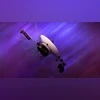 "Credit: NASA/JPL-Caltech")
Image credit: NASA/JPL-Caltech
Listen to This Article
NASA's Voyager 1 spacecraft has been in space for nearly five decades, enduring the harsh environment of outer space. In the latest development, the team at the US space agency managed to restart a thruster believed to have stopped working back in 2004 after losing power in two small internal heaters.
Voyager 1, currently cruising through interstellar space at a distance of 15.14 billion miles (24.4 billion kilometres) from Earth, was launched in 1977. Its twin probe, Voyager 2, followed a month later. Both spacecraft are travelling at speeds of around 35,000 miles per hour through interstellar space.
Voyagers rely on thrusters
Both spacecraft rely on a set of primary thrusters to control their orientation and keep their antennas pointed towards Earth so they can transmit data and receive commands.
The main thrusters on the spacecraft are responsible for adjusting its pitch and yaw, while different thrusters handle its roll. These thrusters—both primary and backup—rotate the spacecraft in a way similar to how a vinyl record spins, ensuring that each Voyager stays aligned with a reference star used for navigation in space.
Also Read

 "Axiom 4 mission, Ax-4 mission, Ax4 mission, Axiom, Axiom Space, Axiom 4, Ax4, Ax-4, Shubhanshu Shukla")
 "Shubhanshu Shukla")
 "NASA")
 "Venus, planet")
 "nasa")
A third set of thrusters, primarily used during planetary flybys, was brought back online in 2018 and 2019. However, these are not capable of managing roll adjustments—critical for maintaining communication with Earth.
Primary thruster failure and the backup strategy
Engineers have long managed the clogged tubes of the Voyagers by switching between primary, backup, and trajectory thrusters. Voyager 1’s primary roll thruster stopped functioning in 2004 after its internal heaters failed. At the time, the team deemed the issue unfixable and opted to rely on the backup roll thrusters to keep the spacecraft aligned.
Kareem Badaruddin, Voyager mission manager at JPL (Jet Propulsion Laboratory), which manages the mission for NASA, said, “I think at that time, the team was OK with accepting that the primary roll thrusters didn’t work because they had a perfectly good backup.”
He added, “And frankly, they probably didn’t think the Voyagers were going to keep going for another 20 years.”
Journey of Voyager 1 thrusters’ revival
The inability to control roll motion recently posed a major threat to the mission. This prompted the team to revisit the 2004 thruster failure.
While investigating, engineers discovered that an unexpected disturbance in the circuit controlling the heaters' power supply had flipped a switch to the wrong position. If they could return it to its original state, the heater might function again—allowing them to reactivate the primary roll thruster in case the backup system, in use since 2004, became fully clogged.
Restart under a tight timeline
Restarting the heater wasn't easy—it required complex troubleshooting. The team had to work on the dormant roll thrusters and attempt to reactivate the heater. During this process, if the star tracker drifted too far from the guide star, the long-dormant roll thrusters would have automatically fired, thanks to their programming.
If the heaters were still off when the thrusters activated, it could have triggered a small explosion. Precision was crucial—the team had to get the star tracker pointed as accurately as possible.
One antenna could save the day
Despite the time pressure, the team managed to accomplish this feat. From May 4, 2025, through February 2026, the Deep Space Station 43 (DSS-43)—a 230-foot-wide (70-meter-wide) antenna in Canberra, Australia—will undergo upgrades and remain offline for most of that period, except for brief windows in August and December.
NASA’s Deep Space Network consists of three ground-based facilities—located in Goldstone (California), Madrid (Spain), and Canberra—strategically placed to ensure constant contact with distant spacecraft as the Earth rotates. However, DSS-43 is the only antenna powerful enough to send commands to the Voyagers.
Suzanne Dodd, Voyager project manager and director of the Interplanetary Network at JPL, which oversees the Deep Space Network for NASA, said, “These antenna upgrades are important for future crewed lunar landings, and they also increase communications capacity for our science missions in deep space, some of which are building on the discoveries Voyager made.”
She added, “We’ve been through downtime like this before, so we’re just preparing as much as we can.”
Long shot pays off
The team watched as the spacecraft executed their commands on March 20. Because of its distance, it takes more than 23 hours for the message to travel from the spacecraft to Earth, which means whatever the team is watching had occurred almost a day earlier. In case the test had failed, the Voyager might already have been in danger. However, within 20 minutes, the team saw the thruster heaters temperature rising dramatically knowing that they had succeeded.
Todd Barber, the mission’s propulsion lead at JPL, said, “It was such a glorious moment. Team morale was very high that day.” “These thrusters were considered dead. And that was a legitimate conclusion. It’s just that one of our engineers had this insight that maybe there was this other possible cause and it was fixable. It was yet another miracle save for Voyager,” Barber added.
More From This Section
 "fossil fuel, gas, lpg, pipes")
 "Poland, Poland flag, Polish flag")
 "Kanye West")
 "Nvidia, Nvidia Chips")
 "US students, students in US")
Topics : NASA NASA satellite Scientist
Don't miss the most important news and views of the day. Get them on our Telegram channel
First Published: May 19 2025 | 1:22 PM IST