


Who is Nicolás Maduro, the Venezuelan leader US claims to have captured?
Venezuelan authorities said the government did not know the whereabouts of President Maduro and his wife, Cilia Flores, following the US operation
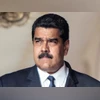 "Nicolás Maduro is a Venezuelan politician")
Venezuelan President Nicolás Maduro. (Photo: Wikimedia Commons)
Listen to This Article
After President Donald Trump on Saturday claimed that Venezuelan President Nicolás Maduro was captured during US strikes, attention turned to the long and controversial career of the leader who dominated Venezuela’s politics for over a decade.
Maduro's rags to riches story
Maduro was born on November 23, 1962, into a working-class family. His father was a trade union leader, and Maduro worked as a bus driver during the period when army officer Hugo Chávez led a failed coup attempt in 1992.
He later campaigned for Chávez’s release from prison and emerged as a committed supporter of his left-wing political agenda. After Chávez’s election victory in 1998, Maduro won a seat in Venezuela’s legislature.
Rise through Chávez’s inner circle
Maduro steadily rose within the political system, serving as president of the National Assembly before becoming foreign minister. In that role, he travelled widely to build international partnerships, often backed by oil-funded assistance programmes.
Chávez eventually named Maduro as his chosen successor. Following Chávez’s death, Maduro won the 2013 presidential election by a narrow margin.
Also Read

 "Trump")
 "Reliance Industries share price")
 "Goldman Sachs Group Inc")
 "Marco Rubio")
 "Smog, Delhi Pollution, Delhi Air Quality, Pollution")
Economic collapse and unrest under his rule
Maduro’s presidency coincided with a severe economic downturn marked by hyperinflation, widespread shortages and a sharp fall in living standards. His government faced persistent accusations of manipulating elections and suppressing dissent.
Security forces carried out crackdowns on protests in 2014 and 2017, drawing international criticism. Millions of Venezuelans left the country during this period, fleeing economic hardship and political instability.
Sanctions, indictments and disputed elections
The US and other countries imposed extensive sanctions on Maduro’s government. In 2020, Washington indicted him on charges, including corruption and links to drug trafficking. However, Maduro rejected all allegations.
He was sworn in for a third term in January 2025 after a 2024 election that opposition groups and international observers widely condemned as fraudulent. Thousands of protesters who challenged the declared outcome were detained.
Human rights findings and global criticism
A United Nations fact-finding mission reported last month that Venezuela’s Bolivarian National Guard committed serious human rights violations and crimes against humanity over more than a decade, often acting with impunity while targeting political opponents.
Maduro’s record also drew renewed attention in 2025 when Venezuela’s opposition leader María Corina Machado received the Nobel Peace Prize, an award widely seen as a rebuke to the government’s repressive policies.
The United States carried out large-scale strikes on Venezuela, which has triggered global condemnation and calls for restraint and adherence to international law.
In a post on Truth Social, US President Donald Trump claimed that Maduro and his wife were “captured and flown out of the country” during the operation.
Trump said the action was conducted “in conjunction with US law enforcement”.
Venezuela not aware of Maduro’s whereabouts
Venezuela’s Vice-President Delcy Rodríguez said the government did not know the whereabouts of President Maduro and his wife, Cilia Flores, following the US operation.
In an audio message aired on state television on Saturday, Rodríguez said authorities were seeking confirmation that both Maduro and Flores were alive.
She said the government was demanding proof amid what it described as uncertainty created by Washington’s claims about the president’s status.
Trump to hold news conference
Trump says he will hold a presser at 11am local time (21:30 IST) from Mar-a-Lago, his private estate in Palm Beach, Florida.
More From This Section
 "Bangladesh, Bangladesh Flag")
 "Iran")
 "Budanov")
 "Israel, Yemen, airstrike")
 "Venezuela")
Topics : Donald Trump World News Venezuela Nicolas Maduro United States BS Web Reports Venezuela Crisis
Don't miss the most important news and views of the day. Get them on our Telegram channel
First Published: Jan 03 2026 | 6:46 PM IST