


Rachel Reeves signals possible UK tax hikes ahead of November budget
In a pre-budget speech in Downing Street carried on national broadcasters, Reeves argued she would prioritize bringing down borrowing costs and inflation
 "Rachel Reeves")
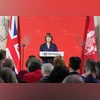
In the clearest hint yet that the Labour government will compromise on its commitment to avoid lifting the UK’s main tax levers, Reeves said the world had changed since Prime Minister Keir Starmer came to power in July 2024. (Photo: Bloomberg)
Listen to This Article
Chancellor of the Exchequer Rachel Reeves declined to reiterate Labour’s manifesto commitment against broad-based tax hikes, as she made an unusual appeal to the British public to support her upcoming budget.
In a pre-budget speech in Downing Street carried on national broadcasters, Reeves argued she would prioritize bringing down borrowing costs and inflation. She blamed the previous Conservative administration for putting lasting pressure on the public finances, citing austerity and Britain’s exit from the European Union.
In the clearest hint yet that the Labour government will compromise on its commitment to avoid lifting the UK’s main tax levers, Reeves said the world had changed since Prime Minister Keir Starmer came to power in July 2024. She argued that the left-leaning party had bigger obligations, in a likely preview of her pitch when she presents the budget to Parliament on Nov. 26.
“We were elected on a commitment to put country before party, the national interest before political calculation,” Reeves said, flanked by union flags and standing in front of a placard that read “strong foundations | secure future.” “My focus will be on getting NHS waiting lists down, getting the cost of living down, and also getting the national debt down.”
Gilts briefly jumped as Reeves spoke on Tuesday, with 30-year yields hitting the lowest since April. But they pared that move after the speech fell short of providing concrete details of her plans. The pound fell to a seven-month low of $1.3059.
Also Read

 "Prince Andrew")
 "BID, AUCTION")
 "Rishi Sunak, Rishi, UK PM")
 "Modi, Narendra Modi, Keir Starmer, Keir, Starmer, UK")
 "volatility index, stock market volatility, India VIX, stock market today, why are nifty, sensex down today, stock market, stock market news")
The speech on Tuesday represented a break with convention, in which chancellors usually try to say as little as possible about their budget plans before formally submitting them to the House of Commons. One of her Labour predecessors, Hugh Dalton, was famously forced to resign in 1947 for revealing budget details to a journalist shortly ahead of the speech.
This year, however, Reeves is facing a series of particularly difficult-to-explain fiscal challenges including elevated borrowing costs, expensive policy U-turns and a significant downgrade to growth from the fiscal watchdog, the Office for Budget Responsibility. The chancellor is drawing up a politically contentious package of tax hikes and spending restraint to close a fiscal hole as big as £35 billion — all at a time when Labour is ailing in the polls.
A key problem for Reeves is Labour’s flagship campaign pledge on taxation, which ruled out any increases to income tax, national insurance or VAT on “working people.” Those levies generate about two-thirds of all of the government’s tax revenue, and economists widely predict she would have to resort to hiking one of them to raise significant sums. Last year’s budget already proved controversial, by lifting the portion of NI paid by employers.
Reeves is still waiting for final rounds of economic forecasts from the OBR before locking in her budget decisions, and there’s still a chance she won’t need to break her manifesto promises if those forecasts are better than expected. On Tuesday, the influential Resolution Foundation think tank predicted her fiscal hole would be smaller than feared.
“Today was squarely about the chancellor trying to land her preferred political framing for the budget,” said James Nation, managing director at Forefront Advisers and a former special adviser to ex-chancellor Rishi Sunak. “Even if she doesn’t breach the manifesto — and a final decision will depend on the ‘post measures’ outlook from the OBR — she needed to try and condition the public for extensive tax rises in the next few weeks. Whether people buy her framing is another question.”
Reeves reasserted convention when pressed for details on her plans, saying she wouldn’t discuss “individual policies” until the budget speech. She repeatedly declined to answer questions about whether Labour’s campaign tax commitments still stood when quizzed by journalists after her speech.
“At the election, I said that we would put the national interest first,” she said. “People can see that times are changing, the the global circumstances are challenging.”
Reeves lifted taxes by around £40 billion ($52 billion) at last year’s budget, which she promised at the time was a one-off move for raising revenue. However, she said on Tuesday that previous Conservative policies around austerity, Brexit and the handling of the pandemic have left a worse inheritance than previously thought. She also blamed global trade frictions in light of US President Donald Trump’s trade war.
Reeves also reaffirmed her commitment to the UK’s “iron clad” fiscal rules. Borrowing costs have risen since Reeves’ last fiscal event in March, adding billions in extra debt repayments, while the government was forced to shelve major cuts to welfare spending in the summer following a rebellion by Labour Members of Parliament.
“No accounting trick can change the basic fact that government debt is sold on financial markets,” Reeves said. Some members of her Labour party have argued that the rules could be relaxed to free up more public spending.
Reeves said the budget would be a collective national effort. Echoing the sentiments made by former Chancellor George Osborne in his first austerity budget in 2010, she said: “If we are to build the future of Britain together, we will all have to contribute to that effort. Each of us must do our bit for the security of our country and the brightness of its future.”
The opposition Liberal Democrats said the speech “wasn’t pitch rolling, it was pointless.” Its Treasury Spokesperson Daisy Cooper warned: “It’s clear that this budget will be a bitter pill to swallow as the government seems to have run out of excuses.”
Kemi Badenoch, leader of the main opposition Conservative party, described Reeves’ remarks as “one long waffle bomb.”
“Labour have given up,” she said. “They are managing decline.”
More From This Section
 "Tesla, Elon Musk")
 "Russian Oil")
 "India passport, Indian passport")
 "Dick Cheney")
 "Dick Cheney (Image: X/@overitall69)")
Topics : World News UK tax Budget
Don't miss the most important news and views of the day. Get them on our Telegram channel
First Published: Nov 04 2025 | 10:38 PM IST