


Trump runs into the difficulty of Putin diplomacy, ending long war
European leaders were relieved Trump avoided a pro-Moscow deal, but the summit let Putin reclaim global stature and may have given Russia more time to advance its Ukraine offensive
 "Donald Trump")
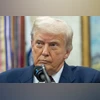
Trump has set his eye on the Nobel Peace Prize, with numerous allies offering nominations (Photo: PTI)
Listen to This Article
President Donald Trump walked into a summit with Russia's Vladimir Putin pressing for a ceasefire deal and threatening severe consequences and tough new sanctions if the Kremlin leader failed to agree to halt the fighting in Ukraine.
Instead, Trump was the one who stood down, dropping his demand for a ceasefire in favour of pursuing a full peace accord a position that aligns with Putin's.
After calls with Ukrainian President Volodymyr Zelenskyy and European leaders, Trump wrote as he flew home from Friday's meeting in Alaska that it had been determined by all that the best way to end the horrific war between Russia and Ukraine is to go directly to a Peace Agreement, which would end the war, and not a mere Ceasefire Agreement, which often times do not hold up.
It was a dramatic reversal that laid bare the challenges of dealing with Putin, a cunning adversary, as well as the complexities of a conflict that Trump had repeatedly boasted during his campaign that he could solve within 24 hours.
Trump's position after the summit with Putin
While European leaders were relieved that Trump did not agree to a deal that favored Moscow, the summit allowed Putin to reclaim his place on the world stage and may have bought Russia more time to push forward with its offensive in Ukraine.
Also Read

 "China stocks, China stock market")
 "Steel plant, US Steel plant, Clairton Coke Works")
 "Volodymyr Zelenskyy, Zelenskyy")
 "stock market, trading, stocks")
 "Trump, Putin, Trump-Putin, Alaska summit")
We're back to where we were before without him having gone to Alaska, said Fiona Hill, who served as Trump's senior adviser on Russia at the National Security Council during his first term, including when he last met Putin in Helsinki in 2018.
In an interview, Hill argued that Trump had emerged from the meeting in a weaker position because of his reversal. Other leaders, she said, might now look at the US president and think he's not the big guy that he thinks he is and certainly not the dealmaking genius.
All the way along, Trump was convinced he has incredible forces of persuasion, she said, but he came out of the meeting without a ceasefire the one thing he had been pushing for.
Trump administration officials defended the move.
Special envoy Steve Witkoff said on Fox News Sunday that Trump had talked about a ceasefire until he made a lot of different wins in this meeting and began to realise that we could be talking about a peace deal. The ultimate deal here is a peace deal.
We are intent on trying to hammer out a peace deal that ends the fighting permanently. Very, very quickly quicker than a ceasefire, he said on CNN.
Trump has touted himself as the president of peace
Trump has tried to cast himself as a peacemaker, taking credit for helping deescalate conflicts between India and Pakistan as well as Thailand and Cambodia. He mediated a peace agreement between Rwanda and the Democratic Republic of Congo and another between the leaders of Armenia and Azerbaijan to end decades of fighting.
Trump has set his eye on the Nobel Peace Prize, with numerous allies offering nominations.
But Trump has struggled to made headway on the world's two most vexing conflicts: the Russia-Ukraine war and Israel's offensive against Hamas in Gaza.
Some see a Putin win and a Trump loss
In Europe, the summit was seen as a major diplomatic coup for Putin, who has been eager to emerge from geopolitical isolation.
Former Russian President Dmitry Medvedev, deputy head of Russia's Security Council, praised the summit as a breakthrough in restoring high-level dialogue between Moscow and Washington.
Former Swedish Prime Minister Carl Bildt called the meeting a distinct win for Putin. He didn't yield an inch but was also a distinct setback for Trump. No ceasefire in sight.
What the world sees is a weak and wobbling America, Bildt posted on X.
Witkoff disagreed.
I think we ought to be focusing on what the end result is, he said. I think that we are a whole lot closer to eliminating death on the battlefield in Ukraine and Russia, and it's the overall goal.
(Only the headline and picture of this report may have been reworked by the Business Standard staff; the rest of the content is auto-generated from a syndicated feed.)
More From This Section
 "Air Canada, Air Canada protest")
 "gaza")
 "wildfire")
 "Marco Rubio")
 "Photo: Reuters")
Don't miss the most important news and views of the day. Get them on our Telegram channel
First Published: Aug 18 2025 | 7:53 AM IST