


Trump security team's private data and passwords exposed in online leaks
An investigation by media company Der Spiegel reveals that mobile numbers, email addresses, and even passwords of Donald Trump's key security officials were found online
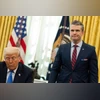 "Pete Hegseth")
US Defense Secretary Pete Hegseth, and US President Donald Trump (Photo: Reuters)
Listen to This Article
Sensitive personal details of key security officials serving under US President Donald Trump are readily accessible on the internet, an investigation by media company Der Spiegel has revealed.
Reporters uncovered mobile numbers, email addresses, and even passwords linked to top government figures, exposing significant security vulnerability.
The journalists obtained this information by using commercial people-search tools alongside hacked customer data that had been leaked online. Among those affected are National Security Adviser Mike Waltz, Director of National Intelligence Tulsi Gabbard, and Secretary of Defense Pete Hegseth.
This comes amid the controversy surrounding the White House where The Atlantic’s editor-in-chief Jeffrey Goldberg was mistakenly added to a private Signal group, named ‘Houthi PC Small Group’. The members of the group, which included Vice President JD Vance, Defense Secretary Pete Hegseth, National Security Adviser Michael Waltz among others, discussed planned military actions against Yemen’s Houthi armed group.
Read: Atlantic drops full Signal chat on Yemen attack; White House downplays leak
Security risks and digital footprints
Many of the exposed contact details are still in use. Some are linked to social media accounts on LinkedIn and Instagram, while others have been used to set up Dropbox accounts or fitness tracking apps. The investigation by the media company showed that several of these numbers are associated with WhatsApp and Signal accounts, raising concerns about their potential exploitation.
Also Read

 "J&K shutdown, J&K Security")
 "Cars, auto industry")
 "Elon musk, musk, Elon")
 "elon musk, donald trump, tesla")
 "US flag, US, united states")
Numbers linked to Signal accounts
One of the alarming aspects of this breach is the possibility that a highly sensitive Signal chat involving these officials was conducted using their publicly available phone numbers. While it remains uncertain if these particular accounts were used for the discussion, Der Spiegel confirmed that the exposed personal numbers of Director of National Intelligence Tulsi Gabbard and Waltz are indeed linked to Signal accounts.
How the data was discovered
Der Spiegel was able to retrieve contact information for Gabbard, Waltz, and Hegseth from commercial databases, while additional details surfaced in widely available password leaks.
Hegseth’s contact details were particularly easy to obtain. Using a commercial data provider typically employed for sales and recruitment purposes, Der Spiegel simply submitted a link to his LinkedIn profile. In return, they received his Gmail address, mobile phone number, and other personal information. Further searches through leaked user databases confirmed that this email address, and in some instances its associated password, appeared in more than 20 publicly available data breaches. Public records also indicated that the email account had been actively used in recent days.
The Atlantic releases Yemen chats
Meanwhile, The Atlantic on Wednesday published a transcript of text messages revealing that Secretary of Defense Pete Hegseth shared details of military attack plans in Yemen through a Signal group chat. In an article titled ‘Here Are the Attack Plans That Trump’s Advisers Shared on Signal’, Goldberg cited messages in which Hegseth outlined the types of US military aircraft involved and the timing of recent airstrikes against Houthi militias in Yemen.
Following this, Hegseth responded on social media, refuting the claims. “So, let’s get this straight. The Atlantic released the so-called ‘war plans’ and those ‘plans’ include: no names, no targets, no locations, no units, no routes, no sources, no methods — and no classified information. Those are some really [expletive] war plans. This only proves one thing: Jeff Goldberg has never seen a war plan or an ‘attack plan’ (as he now calls it). Not even close,” he said.
More From This Section
 "Shigeru Ishiba")
 "Wikipedia")
 "North Korean army")
 "china Flag, China")
 "Donald Trump, Trump")
Topics : Donald Trump Donald Trump administration United States Data breach BS Web Reports White House
Don't miss the most important news and views of the day. Get them on our Telegram channel
First Published: Mar 27 2025 | 11:19 AM IST