


Penguins taxed? What made Trump slap 10% tariff on remote Antarctic islands
Despite no human presence or trade activity, Donald Trump's latest tariff move targets Australia's remote Heard and McDonald Islands
 "penguins")
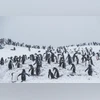
Heard and McDonald Islands serve as a crucial habitat for penguins, seabirds, and elephant seals. (Photo/Freepik)
Listen to This Article
US President Donald Trump announced on Wednesday that the United States would impose reciprocal tariffs on select Antarctic territories, despite their lack of human habitation. The affected regions include the Heard and McDonald Islands, known for their isolation and rich wildlife. The move is part of Trump’s broader trade policy initiative.
Details of the tariff plan
During a press conference, Trump used a poster to outline the countries and territories subject to the new tariffs, while additional details were provided on printed handouts distributed to reporters. One of these documents indicated that the Heard and McDonald Islands currently impose a ‘Tariff to the USA’ at a rate of 10 per cent. A footnote clarified that this figure accounts for “currency manipulation and trade barriers”. In response, the US will implement a “discounted reciprocal tariff” at the same 10 per cent rate.
Australia’s claim and environmental significance
Australia has administered the Heard and McDonald Islands since 1953, primarily for conservation and research purposes. The territory, designated as a World Heritage Site, features glaciers, rocky landscapes, and an active volcano on Heard Island. The islands serve as a crucial habitat for penguins, seabirds, and elephant seals.
Beyond the Heard and McDonald Islands, several Australian territories are also affected by the tariff policy. Christmas Island and the Cocos Keeling Islands now face a 10 per cent tariff, while Norfolk Island has been hit with a significantly higher 29 per cent rate.
Legal and geopolitical implications
Under the Antarctic Treaty, Antarctica is designated for peaceful purposes and scientific collaboration, preventing any single nation from claiming land on the continent. However, Australia extended its jurisdiction over surrounding waters by establishing a marine reserve in 2002 and expanding its boundaries in 2023.
Australia’s Defense Force patrols the waters surrounding these islands as part of Operation Resolute, an initiative covering a vast maritime region, including waters off Christmas, Cocos Keeling, Macquarie, Norfolk, and Lord Howe Islands. This operation aims to counter security threats such as piracy and pollution.
Although uninhabited, the region occasionally receives visits from ships engaged in scientific research, commercial fishing, and tourism, according to the Australian Antarctic Division.
More From This Section

 "Netanyahu, Benjamin Netanyahu")
 "Bill Gates")
 "US President Donald Trump")
 "US China flag, US-China flag")
 "Donald Trump, Trump")
Don't miss the most important news and views of the day. Get them on our Telegram channel
First Published: Apr 03 2025 | 12:07 PM IST