


US, UK, China evacuate West Asia embassies as Trump 'not happy' on Iran
Earlier on Friday, the US told non-emergency staff at its embassy in Jerusalem that they're allowed to leave Israel, with the country being vulnerable to Iranian retaliation
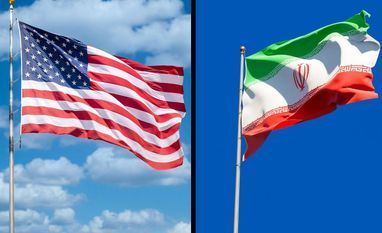 "us iran, us flag, iran flag")
The flurry of evacuations and warnings comes as the US continues to assemble a vast array of military forces in the region following Trump’s repeated threats to attack Iran | Image: Canva/Free


Listen to This Article
By Josh Wingrove, Ben Bartenstein and Andrey Biryukov
Countries including the US, UK and China evacuated embassy staff in the Middle East and issued travel advisories amid concerns about a regional conflict, as President Donald Trump on Friday sounded downbeat about diplomatic talks meant to avert airstrikes on Iran.
“I’m not happy with the negotiation,” Trump told reporters in Texas on Friday. “We’re negotiating right now, but they’re not getting to the right answer.”
Asked how close he was to deciding on military strikes, Trump said, “I’d rather not tell you.”
Earlier on Friday, the US told non-emergency staff at its embassy in Jerusalem that they’re allowed to leave Israel, with the country being vulnerable to Iranian retaliation if it participates in a US attack.
Washington issued a similar evacuation order for its diplomatic mission in Beirut on Monday. The UK, China, India and others have also advised citizens or diplomats to leave some parts of the Middle East.
Also Read

 "A 3D printed miniature model of U.S. President Donald Trump, Israel and Iran flags are seen in this illustration")
 "Sam Altman, OpenAI CEO")
 "US President Donald Trump")
 "Iran, Iran flag")
 "US President Donald Trump")
Australia, Poland, Finland, Sweden and Singapore are among the nations advising citizens to leave the region. The UK also said it’s temporarily withdrawing diplomatic staff from Iran.
The flurry of evacuations and warnings comes as the US continues to assemble a vast array of military forces in the region following Trump’s repeated threats to attack Iran and as diplomatic talks continue over Tehran’s nuclear program.
The latest round of US-Iran negotiations took place on Thursday in Geneva, Switzerland. The two sides had agreed to reconvene as soon as next week, with technical talks potentially happening on Monday in Vienna.
Omani Foreign Minister Badr Albusaidi also met with Vice President JD Vance at the White House on Friday, and afterwards said, “peace is within our reach.” Oman is a mediator in the talks involving the US and Iran.
But while Iran and Oman sounded upbeat about making progress, Trump’s comments Friday suggested otherwise. “We haven’t made a final decision,” Trump said of airstrikes. “They cannot have nuclear weapons, and we’re not thrilled with the way they’re negotiating.”
A person familiar with the US position said the American negotiators — led by Trump’s envoy Steve Witkoff and son-in-law Jared Kushner — had left Geneva disappointed.
Amid the continued possibility of US strikes in the energy-rich region, oil prices are rising. Brent crude went up as much as 3.2 per cent to $73 per barrel in London on Friday, the highest intraday price since July.
Trump on Friday downplayed concerns about the likelihood that oil prices will spike if he attacks Iran, saying, “I’m concerned about people’s lives. I’m concerned about long-term health for this country.”
Given the possibility of Israeli involvement in any conflict, the stand-off is weighing on the country’s financial markets, with the shekel having its worst two-day streak since June’s 12-day war with Iran.
In its diplomatic update on Friday, Washington advised non-essential workers and family members to consider leaving while commercial flights are available in Israel. Many airlines have suspended connections with Tel Aviv, Israel’s commercial capital.
The US embassy said it may prohibit travel to certain areas, such as Jerusalem’s Old City and the West Bank, for staff.
Even with the US saying the door to further diplomacy remains open, Trump continues to gather forces in the Middle East.
A second aircraft carrier, the USS Gerald R. Ford, has entered the region and is now in Israeli waters, according to local media. It could join in any attack by Iran or help defend Israel and US assets against Iranian counter-strikes.
The tensions have also prompted two of the world’s five top container carriers to reroute a number of vessels away from the Red Sea, an area in which Iran-backed Houthi militants are active.
A.P. Moller-Maersk A/S said that “unforeseen constraints” led the Danish company to divert some vessels and make them sail south of Africa instead of through the Suez Canal.
That move was mirrored by Hamburg, Germany-based Hapag-Lloyd AG, Maersk’s partner in a vessel-sharing alliance, which cited “unforeseen constraints to the available security assistance in the Red Sea region.”
More From This Section
 "Afghanistan flag, Pakistan flag, Afghanistan-Pakistan")
 "David Ellison in New York")
 "Steve Schwarzman, Blackstone")
 "Pete Hegseth")
 "Donald Trump, Trump")
Topics : Donald Trump Donald Trump administration US-Iran tensions US Iran tensions Israel Iran Conflict
Don't miss the most important news and views of the day. Get them on our Telegram channel
First Published: Feb 28 2026 | 12:37 PM IST