


Why is Xi Jinping unhappy with Chinese officials over AI, EV investments?
Xi Jinping called out local officials at the Central Urban Work Conference for overspending on artificial intelligence, EVs, and quantum computing without adequate expertise or planning
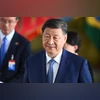 "Xi Jinping")
Xi’s outburst also comes at a time when China is grappling with a broader economic downturn. I Photo: Bloomberg
Listen to This Article
Chinese President Xi Jinping has warned local government authorities against overspending on artificial intelligence (AI), electric vehicles (EVs), and other emerging technologies, according to a report by the Financial Times.
Speaking at the Central Urban Work Conference held in Beijing on July 14–15, Xi reportedly called out the growing trend of "reckless investment" in strategic industries. In a rare and blunt public rebuke, he targeted officials he dubbed “three pats officials”—those who impulsively pat their heads and chests while making rash decisions, and later pat the dust off their backs to avoid accountability.
‘Do all provinces need AI and EV industries?’
During his address, Xi questioned whether every province in China needed to develop industries in sectors such as AI, new energy vehicles, and computing power. He criticised the lack of coordination and oversight, which he said was leading to duplication, inefficiency, and waste of critical national resources.
The President's warning follows an ongoing frenzy of local-level investment, with provinces racing to build AI infrastructure such as data centres. Even remote regions like Xinjiang and Inner Mongolia have joined the race, seeking to attract tech projects and funding.
Lack of expertise raises concerns
The report notes that many of China’s AI and data infrastructure projects are being developed without sufficient technical expertise. As a result, there are concerns that large-scale investments could become unproductive or even counterproductive if they lack strategic alignment or skilled implementation.
Also Read

 "US President Donald Trump, Chinese Premier Xi Jinping")
 "RARE EARTH, CHINA, TRADE")
 "Rahul Gandhi, Rahul, congress leader")
 "S Jaishankar, Jaishankar, Xi Jinping")
 "S Jaishankar shaking hands with Xi Jinping")
This pattern echoes earlier waves of wasteful investment in sectors such as real estate and industrial parks, which failed to generate sustainable economic value. Xi’s comments appear aimed at curbing similar missteps in the fast-evolving tech sector.
EV sector locked in a price war
In the electric vehicle market, fierce competition has sparked aggressive price wars as manufacturers seek to gain market share. However, this strategy is eroding profit margins and sparking concerns among China’s trade partners, who are now accusing Beijing of subsidising overcapacity and distorting global markets.
Beijing’s EV players, already under pressure from tightening regulations and a crowded domestic market, may now face added scrutiny as the government weighs the benefits of expansion against broader economic risks.
China’s deepening economic slowdown
Xi’s outburst also comes at a time when China is grappling with a broader economic downturn. The country is still reeling from the impact of the US–China trade war, including tariffs imposed during Donald Trump’s presidency. At the same time, global demand has softened, foreign investment is shrinking, and domestic consumer confidence remains subdued in the wake of sweeping regulatory crackdowns.
Central Urban Work Conference
The Central Urban Work Conference, a high-level Communist party meeting, has recently gained importance where members meet to discuss urban development. According to China Daily, the meeting was also attended by members of the standing committee of the political bureau of the CPC central committee including Li Qiang, Zhao Leji, Wang Huning, Cai Qi, and Ding Xuexiang and Li Xi.
More From This Section
 "Hurricane")
 "school, Class, Students")
 "jair bolsonaro, ex-president of brazil")
 "Shigeru Ishiba")
 "Delta flight fire")
Don't miss the most important news and views of the day. Get them on our Telegram channel
First Published: Jul 20 2025 | 1:57 PM IST