Agnikul Cosmos fires a single-piece fully 3D printed rocket engine

This is a unique rocket engine because it has been made as a single component in one run of the printer, and has zero assembled parts
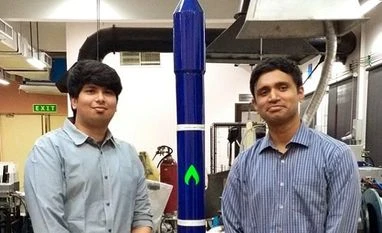
Agnikul
Moim S P M (left) and Srinath Ravichandran, co-founders, Agnikul Cosmos
T E Narasimhan Chennai
3 min read Last Updated : Feb 09 2021 | 10:39 PM IST

Don't want to miss the best from Business Standard?

Indian aerospace start-up Agnikul Cosmos has become the world’s first company to test a single piece, fully 3D printed rocket engine. The Chennai-based manufacturer, which is developing the country’s first private small satellite launch vehicle, Agnibaan, has successfully fired its higher-stage semi-cryogenic  engine, which it calls Agnilet.

This is a unique rocket engine because it is completely 3D printed as a single component, in one run of the printer. This goes to prove the efficacy of Agnikul’s engineering architecture behind its orbital class vehicle Agnibaan’s propulsion systems, said the IIT Madras incubated start-up.

Agnibaan, the rocket, will be capable of carrying up to 100 kg of payload to low Earth orbits up to 700 km with a plug-and-play engine configuration.


Its entire engine, Agnilet, is one piece of hardware from start to finish and has zero assembled parts.

"We don’t think anyone in the world has ever pushed 3D printing of a rocket engine to this extent, and we couldn’t be happier to have conceived, designed, realised and test fired this engine fully in India,” said Srinath Ravichandran, CEO and co-founder of Agnikul Cosmos.

Print perfect
 
> In September 2020, Hyderabad-based space start-up Skyroot Aerospace unveiled its fully 3D printer cryogenic rocket engine. Called Dhawan-I, it is yet to be tested. The engine will be used to power Skyroot’s built-from-scratch rocket, Vikram-II

> SpaceX and the National Aeronautics and Space Administration (NASA) have been experimenting with 3D printing parts of their engines


Rocket engines usually have hundreds of parts – injectors to inject fuel into the engine; cooling channels to cool the engine; the igniter for the propellants, and so on. Agnilet was designed in such a manner so as to encapsulate all of these into just one piece of hardware. This automates the making of an entire engine, said Ravichandran.


“From Agnikul’s operations standpoint, we are relieved that we would not have to track or manufacture numerous parts to realise a rocket engine from now on,” said Moin SPM, cofounder and COO of Agnikul Cosmos. “All that remains after printing is bare minimum post processing after which the engine can directly be assembled in our launch vehicle,” he added.

Agnikul, which was founded in 2017, has been testing engines at a smaller scale, or those that were not 100 per cent additively manufactured, since September 2018. This is the first time the company has demonstrated firing of a semi-cryogenic fully 3D printed rocket engine.

One subscription. Two world-class reads.

Already subscribed? Log in

Subscribe to read the full story →
*Subscribe to Business Standard digital and get complimentary access to The New York Times

Smart Quarterly

₹900

3 Months

₹300/Month

SAVE 25%

Smart Essential

₹2,700

1 Year

₹225/Month

SAVE 46%
*Complimentary New York Times access for the 2nd year will be given after 12 months

Super Saver

₹3,900

2 Years

₹162/Month

Subscribe

Renews automatically, cancel anytime

Here’s what’s included in our digital subscription plans

Exclusive premium stories online

  • Over 30 premium stories daily, handpicked by our editors

Complimentary Access to The New York Times

  • News, Games, Cooking, Audio, Wirecutter & The Athletic

Business Standard Epaper

  • Digital replica of our daily newspaper — with options to read, save, and share

Curated Newsletters

  • Insights on markets, finance, politics, tech, and more delivered to your inbox

Market Analysis & Investment Insights

  • In-depth market analysis & insights with access to The Smart Investor

Archives

  • Repository of articles and publications dating back to 1997

Ad-free Reading

  • Uninterrupted reading experience with no advertisements

Seamless Access Across All Devices

  • Access Business Standard across devices — mobile, tablet, or PC, via web or app

Topics :3D printingrocketStartups

Next Story



