The broad principle that might be worth considering for the government in this situation is that, even if multilateral institutions have failed in addressing these present crises, that should not prevent it from being strengthened in dealing with issues and problems that have a somewhat longer time horizon. In particular, two major global transitions are currently ongoing that could greatly benefit from more, not less, multilateralism: The digital and the climate transition.
Illustration: Ajay Mohanty
Consider first, the digital transition. This has or will affect all sectors of the global economy, including manufacturing, and will largely determine the future global distribution of taxes, profits, and wages. But it cannot be allowed to devolve into a free-for-all or a zero-sum game as did the pandemic response. Naturally, some countries will seek to retain their technological edge. Just last week it emerged that US senators were examining if and how to restrict Apple sharing microchip technology for the iPhone 14 with Chinese manufacturers, in an attempt to maintain the US lead in that sector. And different jurisdictions will have different approaches to privacy and internet governance. But these cannot lead to an even greater splintering of the internet, or of flows of data, technology and capital, than we have currently. It is vital that the multilateralism of the 21st century focus on preserving the potential of the digital revolution to spread information, know-how, and access more widely. The Indian government’s preferred solution to many problems raised by digitalisation is a third way between the private sector-led US model and the state-dominated model of the People’s Republic of China. To the extent that it can be systematised, the Indian approach is largely to permit domestic digital innovation and profit-making within a structure of electronic public goods that are developed by the state and seek to ensure equitable access and a level-playing field. India arrived at this principle more by accident than by design, as a result of the success of the Aadhaar platform — but that does not invalidate its usefulness. Publicly regulated intermediaries that manage the use of and returns to individuals’ data; platforms that marketplaces and sellers can both plug into that allow for transparent e-commerce; universal and interoperable payment systems; transferable digital certificates and records; and even the CoWIN platform can all be seen to operate within this broad paradigm. It provides for both private profit and innovation, for increasing access, and for the legitimate developmental, fiscal, and security concerns of a state. The next step is to understand how it can be generalised across different political and economic systems, support international trade and investment, and support a global rather than national digital transition.

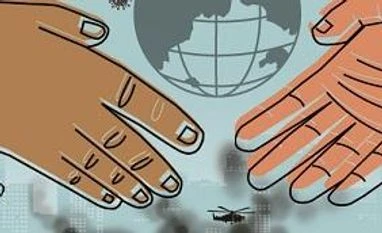 "A renewed multilateralism")












 Connect with us on WhatsApp