IRNSS-1D launch tomorrow; countdown progressing smoothly
The launch originally scheduled for March 9 was deferred after an anomaly was found in a telemetry transmitter
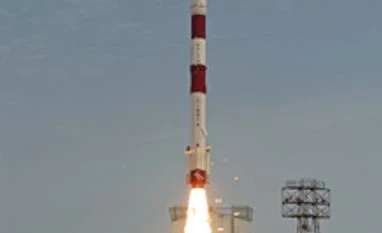
Press Trust of India Chennai The stage is set for the launch of India's satellite IRNSS-1D tomorrow from Sriharikota onboard workhorse PSLV-C27 that would pave the way for the country's own navigation system on par with the GPS of US.
The 59.5-hour countdown for the launch scheduled at 5.19 p.m from the Satish Dhawan Space Centre at Sriharikota, about 90 km from here, is progressing smoothly, Indian Space Research Organisation said today.
"The countdown (which began at 5.49 a.m yesterday) is progressing smoothly. The mixed oxides of nitrogen oxidiser filling operation of fourth stage has been completed," ISRO sources said.
The launch originally scheduled for March 9 was deferred after an anomaly was found in a telemetry transmitter.
IRNSS-1D is the fourth in the series of seven satellites, planned by ISRO to put in place the Indian Regional Navigation Satellite System (IRNSS), currently under development.
The IRNSS system, targeted to be completed by this year at a total cost of Rs. 1,420 crore, will be targeted at South Asia and is designed to provide accurate position information services to users in the country as well as the region extending up to 1,500 km from its boundary.
IRNSS' applications include terrestrial and marine navigation, disaster management, vehicle tracking and fleet management, navigation aide for hikers and travellers, visual and voice navigation for drivers.
While four satellites would be sufficient to start operations of the system, the remaining three would make it more accurate and efficient, ISRO said.
The first three satellites in the IRNSS series were launched from Sriharikota on July 1, 2013, April 4 and October 16 last year respectively.
Similar to the previous three launches, ISRO would use the "XL" version of the Polar Satellite Launch Vehicle (PSLV), its most reliable rocket, for IRNSS-1D which will have a mission life of 10 years.
This is the eighth time XL version is being used after Chandrayaan-I, GSAT-12, RISAT-1, IRNSS-1A, Mars Orbiter Spacecraft, IRNSS-1B and IRNSS-1C.
The 44.4 metre tall PSLV-C27 which has a lift off mass of 1,425 kg PSLV-C27 will put the satellite in Geosynchronous orbit at 111.75 degree east longitude with 30.5 degree inclination.
The system would provide two types of services - Standard Positioning Service, which is provided to all the users, and Restricted Service that is an encrypted service provided only to authorised users.

 "IRNSS-1D launch tomorrow; countdown progressing smoothly")


 Connect with us on WhatsApp