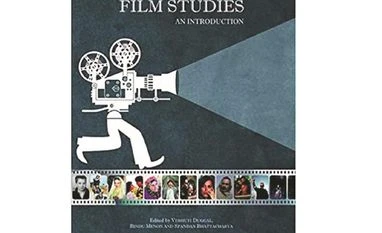
Film Studies: An Introduction
Author: Vebhuti Duggal, Bindu Menon, Spandan Bhattacharya
Publisher: Worldview Publications
The title, the format, even to some extent the content — the first look screams of a course book. But you will be mistaken to think Film Studies: An Introduction belongs solely on a cinema major’s reading list.
If you have ever stared at a cinema screen and wondered how a two-dimensional surface could mimic vast planes and dizzying heights or make the grooves and textures on wooden boards and the folds and creases on velveteen sheets come alive, this is the book for you. If you have wondered how certain scenes in your favourite web series seem to drag on, while others go by too fast, this is a book for you. This is also your book to pick if you want to find doyens of world cinema — such as Kurosawa or Godard — at home in the fine prints of Indian regional cinema, silently shaping the textures, narratives, and soundscapes of Kerala, West Bengal, or Maharashtra, on screen.
Most importantly, though, this is the cinema enthusiast’s “standard book of spells.” Divided into clear sections, the anthology of critical essays provides deep dives into basic cinema terms and concepts like genre and auteurship, breaks down the various ways film elements like lights, camera and sound are utilised on and off screen, introduces the reader to global canonical cinema styles and movements, and then brings us back home to Indian national and regional cinema cultures. If you have been meaning to get a better understanding of how movie magic works, this is a great place to start.
The individual essays in the anthology range from necessary primers, to fascinating glimpses into the niches of Indian and world cinema that are often overlooked by most canon-focused texts. We have essays such as “Silent Cinema in India” by Ravinder Singh, “Elements of Cinema” by Carlos Izquierdo Tobias, and “Film Production” by Anugyan Nag, which feel like chapters right out of a “Cinema 101” curriculum. As one progresses on to essays analysing specific cultures and movements of world cinema however, the necessity of such introductory explainers becomes clear. They not only lay down a basic groundwork for the anthology’s critical and theoretical approaches, but also help etch out for the reader the larger picture.
For instance, Mr Tobias’s essay is quick to ground the definitions and explanations of specific film elements like camera angles, film frame, etc, within the larger critical inspection of cinematic time and space.
Thus, when the reader is taken through the works of Lav Diaz or Samira Makhmalbaf, this general understanding of how the motion picture manipulates time and space through camera angles and cuts helps connect the auteurs’ cinematographic choices with the socio-cultural issues they seek to highlight.
The anthology also compiles such essays as “Dravidian Ideologues and Tamil Cinema” by S E Pillai or “Articulating the region: The Rural Turn in Marathi Cinema” by Aarti Wani, which take the reader deeper into specific niches of film history. Most of these essays work like kaleidoscopes. Several distinct and separate critical lenses are brought together to reveal a pattern of socio-cultural phenomena as captured on screen. The idea is not merely to present an overview. Instead, we enter the idea of conflating the nation with gender dichotomies, through the lens of film romance. Or we are told about the thematic and narrative realignment of Marathi cinema as rural cinema in the 1940s, through a critical appreciation of regional performative traditions such as tamasha.
What set the anthology apart from many of its academic peers, however, are the blue boxes. An otherwise common feature of academic texts, here these boxes are more like snapshots or flash portraits. They provide both context and texture to the discussions in each essay and lend coherence to the overall structure of each section. The box on “Lav Diaz” by Pujita Guha, or the one on “Lata Mangeshkar’s voice in the age of cassette reproduction” by Shikha Jhingan, are particularly noteworthy examples.
But the anthology occasionally suffers from the usual drawbacks of academic writing. The focus on digging deeper into each text and revealing the delicate strands of interdependence between the film form and its socio-cultural backdrops often weighs heavy on getting the inquiry across to the lay reader.

 "Film studies for your first show")












 Connect with us on WhatsApp