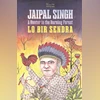
Lo Bir Sendra: A Hunter in the Burning Forest
by Jaipal Singh
Published by Navayana
184 pages ₹399
In India’s political and cultural history, Jaipal Singh is, paradoxically, a prominent and obscure figure. He was the first Adivasi to study at Oxford; the first to join the Indian Civil Service (and to resign from it); and the first to captain an Indian hockey team to an Olympic gold in Amsterdam in 1928. A powerful voice of the Adivasis in the Constituent Assembly, he remained a parliamentarian till his death in 1970, and was the most consequential Adivasi leader after Birsa Munda. Known to his people as “Marang Gomke” — the Big Chief — Jaipal Singh lived a life that traversed continents and contradictions. Lo Bir Sendra: A Hunter in the Burning Forest, his memoir, written in 1969 during a sea voyage to England, captures the essence of that journey — at once personal, political, and profoundly reflective.
The title, Lo Bir Sendra, invokes an Adivasi ritual hunt, a communal act of renewal amid destruction. It is an apt metaphor for Jaipal Singh’s life and mission: To reclaim dignity and identity for India’s Adivasis in a rapidly modernising nation.
Singh’s life reads like an improbable epic. Born in 1903 to priestly Mundas in Takra village, 11 miles south of Ranchi, he was rechristened “Jaipal Singh” when he entered St Paul’s School, Ranchi. Canon W F Cosgrave, the school’s British principal, saw in the bright young boy an exceptional spark and took him to England in 1918 after baptising him.
Lo Bir Sendra is an introspective, sometimes melancholic, collection of notes to oneself rather than a polished autobiography. The manuscript, written in longhand, was never published in Singh’s lifetime. It wandered for decades through many hands — from his eldest son, Amar, to Italian scholar Enrico Fasana, who worked on Adivasis and Dalits in India, then to a student, and eventually to the Jesuits. Finally, Stan Swamy, the Jesuit priest who was arrested at age 83 on terrorist charges and died in prison in 2021, ensured its publication by Prabhat Khabar in 2004. The book’s republication resurrects not just a lost text, but a lost voice.
That voice, candid, restless, and often conflicted, is what makes Lo Bir Sendra so compelling. Singh writes as a man haunted by the contradictions of his own success — an Adivasi who rose to the highest echelons of the British establishment and the Indian elite, yet never stopped feeling alienated from both.
Through a patchwork of recollections, Singh revisits the turning points of his life: His baptism and education; his years in England and Africa; his return to colonial India as an administrator and teacher; and, most crucially, his awakening to the exploitation of his homeland. “The Dikus,” he writes — outsiders and exploiters — “have plundered my people of their forests, their land, and their spirit.”
That awakening drove him into politics. In 1939, Singh founded the Adivasi Mahasabha, which later became the Jharkhand Party. His dream was audacious: A separate Jharkhand state where Adivasis could govern themselves. He represented the Adivasis in the Constituent Assembly, often standing up to towering figures like Nehru and Ambedkar. Yet, in his memoir, he is curiously silent on his political battles.
Instead, the memoir dwells on the emotional undercurrents of a man divided between duty and belonging. Singh recounts his affection for his mother, his admiration for teachers and students, his two marriages (the first to Tara Majumdar, granddaughter of W C Bonnerjee, founding president of the Indian National Congress), and heartbreaks. There is a gentleness in his recollections of village life, of Adivasi customs like “Era Sendra” (annual hunt by the womenfolk) and the process of finding one’s life partner (“Marriage by Capture”, which, contrary to the meaning, gives the girl the final word on who she chooses to marry). These passages are more anthropological than autobiographical, reflecting his lifelong mission to explain Adivasi culture to a world that refused to understand its ways.
If the text sometimes feels disjointed, it is, perhaps, because Singh was not writing for publication but to remember. The editors of this edition have wisely resisted imposing too much order on his musings. Instead, they provide a light scaffolding — contextual paragraphs, annotations, and corrections based on the painstaking scholarship of Santosh Kiro’s The Life and Times of Jaipal Singh Munda (2018). Intimate pictures of Singh’s life offer a visual narrative through the book.
What emerges is not a conventional autobiography but a cultural document — part personal diary, part ethnography. Rather than a perfect book, Lo Bir Sendra is an incomplete conversation. Singh comes across as a man caught between two fires: The “burning forest” of colonial exploitation and the flames of India’s postcolonial politics. His decision to merge the Jharkhand Party with the Congress in 1963 remains a debated choice. Yet, in his reflections, one senses exhaustion more than opportunism. “To achieve self-rule,” his son writes, “he realised one must be part of the system.”
Singh died still dreaming of a Jharkhand that would not be realised until 2000. Lo Bir Sendra ensures his voice isn’t forgotten in time.