'Nehru's First Recruits' traces how India's early diplomats shaped policy

Kallol Bhattacherjee attempts to do that by exploring how Indian diplomats were recruited in the 10 or so years after Independence in 1947
book
Aditi Phadnis
5 min read Last Updated : Mar 31 2025 | 10:47 PM IST
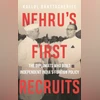
Nehru’s First Recruits: The Diplomats who built Independent India’s Foreign Policy
Author: Kallol Bhattacherjee
Publisher: HarperCollins India
Pages: 368
Price: Rs 699
  Many diplomats have written books about their days in the Indian Foreign Service (IFS), some autobiographical, some region-specific, deriving knowledge and experience from their postings. But apart from former National Security Advisor and Foreign Secretary J N Dixit’s analytical description of the evolution of the Indian Foreign Service based on archival material as well as personal experiences, there are few books on the early entrants to the IFS, who put in place traditions, protocols and the basic principles of Indian foreign policy.
 
Kallol Bhattacherjee attempts to do that by exploring how Indian diplomats were recruited in the 10 or so years after Independence in 1947, how their imprimatur became policy and how their political understanding of India and the world was absorbed in policy. They were an eclectic lot — from poet Harivansh Rai Bachchan, who was put in charge of the ministry’s Hindi section, to journalist P R S Mani, who was briefly imprisoned during the battle of Surabaya. Military men, All India Radio staffers, associates of Netaji Subhas Chandra Bose with deep knowledge of East Asia and Myanmar, and some drawn from ruling families of the time were part of this group.
 
The first examination to induct recruits in the IFS took place in 1948. But before that, Prime Minister Jawaharlal Nehru had already recruited individuals he thought were knowledgeable about world affairs and India’s place in it. There was a disproportionate number of journalists among them. Mr Bhattacherjee puts this down to India gradually realising the power of the media. Besides this, some Indian Civil Service (ICS) officers had been seconded to the Ministry of External Affairs (MEA), which remained under Prime Minister Jawaharlal Nehru until his death in 1964. The author describes the tensions between the ICS, the IFS, and the Indian Administrative Service (IAS) in some detail. Even then, there was an element of competition on the issue of executive control.
 
Few know that the foreign secretary was, in those years, known as the secretary general. He was “selected” by the prime minister and was “the most powerful bureaucrat of the Ministry of External Affairs during the first decade after Independence”. Ratan Nehru, ICS 1925, was the last secretary general, and he demitted office in 1963. The post came to be known as foreign secretary only after that. It was not just nomenclature. It had to do with ICS traditions.
 
A group of five comprised the first batch of the IFS. Dileep S Kamtekar was the only “outsider”. The other four — Venkateswaran, K S Bajpai, Uma Shankar Bajpai and Jagdish Chand Ajmani — all had an ICS connection. It is absorbing to read about India’s foreign policy interventions in those days, when map-making was the currency of power.
 
In Rajeshwar Dayal, who was the son-in-law of the famed Sir J P Srivastava, India got its first experience of international peace-making when he was asked by UN Secretary General Dag Hammarskjöld to become a member of the United Nations Observation Group in Lebanon (UNOGIL) and later, Congo. Both regions remain fraught with tension till today but India’s position can be traced back to initiatives put in place by Dayal.
 
Mr Bhattacherjee also describes the travails and challenges that women in the IFS faced, especially in those years. The struggles of C B Muthamma who joined the service in 1949 when it officially opened to women, is the stuff of legend. Though men diplomats could marry during their service, women were not allowed to. Mira Ishardas Malik, later to become Mira Sinha and later still Mira Sinha Bhattacharjea, had to leave the IFS when she married Sumal Sinha, a decade her senior, an expert in Chinese affairs, who was India’s Officer on Special Duty at Lhasa four months after India established diplomatic relations with China. India abolished the mission in Lhasa and Sinha was sent to Beijing where he met Mira Malik. She became the first woman to resign from the foreign service on marital grounds. Anyone who wanted to understand China in those days had to go to Mira Sinha. She later became a member of an informal but powerful advisory group called the China Study Group. We learn from this book that Harivansh Rai Bachchan, who coined the term “Videsh Mantralaya”, and Nehru had a serious difference of opinion on what Hindi was. For Nehru, Hindi and Urdu were both “Hindustani”, but Bachchan disagreed. While Urdu, Arabic and Farsi words could be used in Hindi, it was not Hindi.
 
Stories recounting Brajesh Mishra’s contributions are also interesting. His father, D P Mishra was former Congress chief minister of Madhya Pradesh who fell out with Mrs Gandhi later. India’s position on the Soviet invasion of Afghanistan was read out by Brajesh Mishra at the UN General Assembly: India did not disapprove of the invasion, but he told his friends he did not support India’s position. He left the IFS, joined the UN, and later went on to become principal secretary to Prime Minister Atal Bihari Vajpayee, as well as India’s first national security advisor.
 
The book has many other insights into the lives of those who laid the foundations of India’s foreign policy. It lays out the historical and geopolitical context in great detail. If anything, a minor drawback of the book is that Mr Bhattacherjee is consumed by a reporter’s enthusiasm to cram in as many facts as he can. A bit more structure would have made the book tighter. But for all that, it is informative, deeply researched and a pleasure to read.

One subscription. Two world-class reads.

Already subscribed? Log in

Subscribe to read the full story →
*Subscribe to Business Standard digital and get complimentary access to The New York Times

Smart Quarterly

₹900

3 Months

₹300/Month

SAVE 25%

Smart Essential

₹2,700

1 Year

₹225/Month

SAVE 46%
*Complimentary New York Times access for the 2nd year will be given after 12 months

Super Saver

₹3,900

2 Years

₹162/Month

Subscribe

Renews automatically, cancel anytime

Here’s what’s included in our digital subscription plans

Exclusive premium stories online

  • Over 30 premium stories daily, handpicked by our editors

Complimentary Access to The New York Times

  • News, Games, Cooking, Audio, Wirecutter & The Athletic

Business Standard Epaper

  • Digital replica of our daily newspaper — with options to read, save, and share

Curated Newsletters

  • Insights on markets, finance, politics, tech, and more delivered to your inbox

Market Analysis & Investment Insights

  • In-depth market analysis & insights with access to The Smart Investor

Archives

  • Repository of articles and publications dating back to 1997

Ad-free Reading

  • Uninterrupted reading experience with no advertisements

Seamless Access Across All Devices

  • Access Business Standard across devices — mobile, tablet, or PC, via web or app

Topics :BOOK REVIEWBook

Next Story



