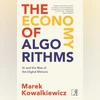
The Economy of Algorithms: AI and the rise of digital minions
Author: Marek Kowalkiewicz
Publisher: Simon & Schuster
Pages: 294
Price: Rs 499
The 20th century economy revolved around big corporations. Then the World Wide Web and the digital economy led to the emergence of an economy of individuals with vastly expanded reach and earning power in the early 21st century. The world has now transitioned to an economy of algorithms backed by the advent of artificial intelligence (AI) and blazing fast networks.
This book is a speculative look at where this new economy could go. It’s written by an academic of Polish origin, who did a stint in Silicon Valley before moving to Australia without losing touch with either the EU or the US. The peripatetic background is worth a mention since it slots into the assertions about the global reach that’s a direct result of the economy of algorithms.
For the rest, the book correctly asks more questions than it can answer, and it offers a wealth of entertaining examples of what algorithms can do. As the author says, it is very difficult to assess the likely long-term effect of technological change, so it’s sensible to speculate. He offers nine rules to handle this new economy but beyond the exhortation to “stay curious”, the other rules could be mutable.
Here are some use-cases (successes and failures) from the book. In the depths of winter, in rural Georgia (USA), a lone jogger had a fall and ended up unconscious. His Apple Watch contacted 911 with a phone call, “The owner of this device needs assistance”, and gave exact GPS coordinates. This enabled emergency services to reach the man before he died of exposure. In 2020, the author attempted to buy Covid masks online and discovered these seemed to go out of stock in the mere seconds between his placing an order and making payment. Similar things happen with sought-after Playstations, fancy sneakers, and even hotel and airline reservations.
This is because many people use algorithms simultaneously to shop for these things. Hence, the thought that B2C has been replaced by B2A2C where A stands for algorithms. Some algos are even programmed to hand back to a human if an “I’m not a robot” verification pops up, and then to take back control once the human has done the captcha.
Well over 50 per cent of the world’s financial trading is done by algos — and many are autonomous. The New York Stock Exchange was testing a new messaging system. An absurd test message (“Google buys Apple!”) was flashed by accident on traders’ screens and deleted within seconds. By then, algos had already traded several million worth of Apple stock.
As smart fridges and smart cars et al become common, grocery buying and vehicle refuelling is done, or prompted by algos, and these too are autonomous, or semi-autonomous. Electric cars map out routes with scheduled stops at charging stations; fridges order eggs and bacon online. Some ATMs are programmed to flash locations of nearby hotels and cafes if an overseas debit card is inserted, on the assumption the user may be a tourist.
What happens if the “shopping algo” of the fridge is programmed to only buy stuff from a specific brand, or specific online shop? Both Amazon and Google have been fined for using algorithms that steered consumers towards the company’s own products and services. How do you advertise to a smart fridge anyway if it’s making the choices about the brand of butter? In 2020, Covid-stricken UK saw massive protests by school-goers. Due to an inability to hold school-leaving exams, Britain’s Office of Qualifications & Exam Regulations used an algo to grade students. This grade was, of course, crucial for college admission. The algo had a problem: It ensured the average grade for a given school would be the same as the 2019 average grade for that school!
In another incident, a software engineer was sacked for automating his work process, and playing games, while the algos did his work. It took six years and many positive job reviews before his company discovered this. As the author says, he should have been promoted! An employee in the IT department of a hotel chain did exactly the same thing and was promoted for saving millions.
There are many remote-workers who use time-saving “digital minions”, as the author calls such algos, to hold down what might seem like several full-time jobs. In even more creative ways, people have used ChatGPT to generate startup ideas with prompts like “Find a new way to get a return on $100,000.”
A Swedish YouTuber has an audience of over 100 million — 10x her nation’s population. That is algorithmic reach for you. The marginal cost of acquiring new customers at scale may drop to zero if the right algo is deployed. Amazon, Facebook and Google are, of course, examples of corporations that have exploited this at gigantic scales.
This is an entertaining, thought-provoking book and it’s well-written. As a first-time author, Marek Kowalkiewicz used an algo. He read acknowledgments on books he liked, to deduce what successful authors did, and to craft a personalised writing process. It’s worked!