Maharashtra’s political landscape has witnessed significant upheavals since the 2019 Assembly elections, with three different governments, three chief ministers, and four deputy chief ministers steering the state over the past five years. This instability highlighted the fragmented and fragile nature of Maharashtra politics. However, as the
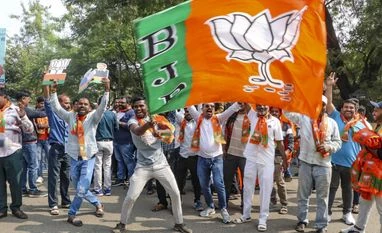
2024 Assembly election results unfolded on Saturday, the Mahayuti coalition, led by the Bharatiya Janata Party (BJP), appears to have swept the state, leading in 229 seats—well over the 145 majority mark required.
Here’s a closer look at the factors that contributed to the Mahayuti alliance’s victory.
Mahayuti vs MVA
The Mahayuti alliance in Maharashtra comprises the BJP, Shiv Sena (Shinde faction), and Ajit Pawar’s Nationalist Congress Party (NCP) faction.
The Opposition alliance, Maha Vikas Aghadi (MVA), includes the Congress, Shiv Sena (Uddhav Balasaheb Thackeray faction), and the NCP (Sharad Pawar faction).
Regaining ground after Lok Sabha loss
In the 2024 Lok Sabha elections in Maharashtra, the MVA achieved a significant victory, winning 30 out of the 48 seats. The Congress emerged as the single largest party in the state with 13 seats. In contrast, the BJP-led National Democratic Alliance (NDA) faced a notable decline. The BJP’s seat count dropped to nine, a sharp decrease from the 23 seats it held in 2019. The Shiv Sena (Shinde faction) secured seven seats, while the Ajit Pawar-led NCP faction won just one seat.
This setback prompted the state government to intensify efforts to regain public trust and counter the Opposition’s growing influence.
Key programmes driving Mahayuti’s campaign
Mukhyamantri Majhi Ladki Bahin Yojana
The government’s flagship welfare programme sought to empower women through direct benefit transfers. Monthly aid under the scheme was increased from Rs 1,500 to Rs 2,100, benefiting over 23 million women and delivering Rs 25,000 annually to each beneficiary.
Announced in the Maharashtra Budget for FY2024-25, presented on June 28, 2024, this is the largest direct cash transfer initiative in Maharashtra’s history. It reflects a growing trend of women-centric schemes catering to a key voter demographic.
Infrastructure development in rural areas
Targeting rural voters, the Mahayuti government constructed over 45,000 agricultural roads, improving connectivity and market access for farmers.
In the FY2024-25 Budget, the state allocated 12.7 per cent of its total expenditure to infrastructure projects, up from 9.6 per cent in FY2019-20.
Employment and social welfare initiatives
The government introduced several measures aimed at employment generation and social welfare:
- Promised 2.5 million new jobs statewide.
- Offered Rs 10,000 monthly stipends to one million vocational students.
- Increased salaries of Anganwadi and ASHA workers to Rs 15,000 per month.
Energy and cost of living relief
The Mahayuti coalition pledged a 30 per cent reduction in electricity bills and prioritised solar and renewable energy adoption. Measures to combat inflation and reduce the cost of essential goods were also announced.
In September 2024, Adani Power and Adani Green Energy secured a joint bid to supply 6,600 megawatts of power to Maharashtra for 25 years, aiming to meet the state’s growing energy demands.
Maratha reservation
The government enacted the Maratha Reservation Act in November 2018, introducing a 10 per cent quota for the Maratha community in education and government jobs. This legislation, backed by surveys classifying Marathas as socially and educationally backward, continues to play a key role in voter mobilisation.
Factors behind Mahayuti’s popularity
The Mahayuti coalition’s popularity in Maharashtra can be summarised as:
1. OBC and Maratha consolidation: Policies addressing demands of politically influential communities, including the Marathas and Other Backward Classes (OBCs), bolstered support.
2. Women-centric schemes: Initiatives like the Majhi Ladki Bahin Yojana gave the BJP-led coalition an edge among women voters.
3. Welfare and development focus: Targeting employment, rural development, and inflation helped expand appeal across diverse demographic groups.

 "Mahayuti set to sweep Maharashtra: What worked for the BJP-led alliance?")


