Bringing busking to India: Buskr Booth rocks Delhi-National Capital Region

Curated performances timed with World Music Day held in public spaces in Delhi, Gurugram and Noida
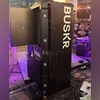
Buskr Booth
Georgie Koithara New Delhi
4 min read Last Updated : Jun 23 2025 | 6:58 PM IST
To mark World Music Day, June 21, entertainment company Buskr soft-launched its flagship innovation, the Buskr Booth, with a three-day iteration of their performance initiative, Buskr Chowk. 
 
Held through June 20 to 22 across the Delhi National Capital Region, the events were designed to introduce Indian audiences to the global culture of busking through curated performances in public spaces.
 
The Buskr Booth is a compact 3x3 feet plug-and-play public address system that enables seamless musical and visual performances. It provides a semi-professional stage setup with sound support and digital tools, offering independent artists a ready space to perform, promote and connect with new audiences. 
 
Manu Saksena, director of Feel Good Communications, the company behind the innovation, said the platform had been under development for some time and had recently received a global patent. Given this, “World Music Day seemed like the right moment to launch something that celebrates public music performance,” he said.
 
The soft launch, held at three venues, served as a live demonstration of how the Buskr Booth can support its core function: busking, the practice of performing in public places, often for voluntary donations. As one event host pointed out, “Busking is a widely accepted practice abroad; Ed Sheeran was discovered while busking.”
 
The launch kicked off on June 20 at PVR Priya, New Delhi, in collaboration with Superkicks, a sneakers and apparel company. The evening featured performances by vocalists Pahar, Karun and Faizan, with Nanku and Pho also taking the stage. 
 
On June 21, the booth was installed at CyberHub, Gurugram, and hosted a varied line-up: Vaibhav aka Groove performed electronic music with live drums; flautist Siddhi Prasanna mesmerised the crowd; indie-electronic artist Curtain Blue played a set; Ankur Tewari, best known for the viral track Khalasi, delivered a crowd-pleasing performance; and Akhil Sachdeva brought his signature Bollywood sound to the evening.
 
On the final day, June 22, the action shifted to Mall of India, Noida, and featured an instrumental jam session by Bobby Pathak, Ritesh Prasanna and Vinayak Pant, followed by a vibrant performance from Kutle Khan.
 
Curtain Blue, the moniker of Delhi-based singer and producer Abhishek Bhatia, performed at the CyberHub event. Highlighting the significance of the Buskr Booth, Bhatia said, “Busking hasn’t really entered the Indian scene in a structured way yet. This booth offers a safe and enabling space for artists like me to perform.” He added that Buskr creates a win-win situation as the venue sees more footfall, the artist gets access to a real audience, and the public enjoys a free, enriching experience.
 
Saksena, in a separate conversation, echoed this sentiment, noting that busking is well-organised and common in other countries. “In India, there aren’t designated spaces where artists can perform freely. Our aim is to create those spaces using the patented Buskr Booth, so that artists can express themselves with ease.”
 
When asked about permanent installations, Saksena clarified that there are none yet due to the regulatory challenges involved. “Busking as a concept is still nascent in India. Before seeking permits for permanent booths, our goal is to establish an ecosystem, a culture where people understand and support busking.” 
 
Currently, artists interested in performing at Buskr Chowk events can apply via Buskr’s official website. In terms of location strategy, the platform is prioritising public spaces owned by private entities, which involve fewer bureaucratic hurdles.
 
Looking ahead, the business model for scaling the Buskr Booth remains flexible. Saksena outlined three potential paths: private venues investing in booths for their own public spaces; Buskr installing the booths independently; or partnerships between Buskr and venue owners. But their priority at this moment remains to normalise busking in India and build a community around it.

One subscription. Two world-class reads.

Already subscribed? Log in

Subscribe to read the full story →
*Subscribe to Business Standard digital and get complimentary access to The New York Times

Smart Quarterly

₹900

3 Months

₹300/Month

SAVE 25%

Smart Essential

₹2,700

1 Year

₹225/Month

SAVE 46%
*Complimentary New York Times access for the 2nd year will be given after 12 months

Super Saver

₹3,900

2 Years

₹162/Month

Subscribe

Renews automatically, cancel anytime

Here’s what’s included in our digital subscription plans

Exclusive premium stories online

  • Over 30 premium stories daily, handpicked by our editors

Complimentary Access to The New York Times

  • News, Games, Cooking, Audio, Wirecutter & The Athletic

Business Standard Epaper

  • Digital replica of our daily newspaper — with options to read, save, and share

Curated Newsletters

  • Insights on markets, finance, politics, tech, and more delivered to your inbox

Market Analysis & Investment Insights

  • In-depth market analysis & insights with access to The Smart Investor

Archives

  • Repository of articles and publications dating back to 1997

Ad-free Reading

  • Uninterrupted reading experience with no advertisements

Seamless Access Across All Devices

  • Access Business Standard across devices — mobile, tablet, or PC, via web or app

Topics :DelhiMusicEntertainment News

Next Story



