India planning ₹2,000 crore drone incentive after Pakistan conflict
India's push to build more home-grown drones stems from the four-day clash with Pakistan in May that marked the first time New Delhi and Islamabad utilized UAVs at scale against each other
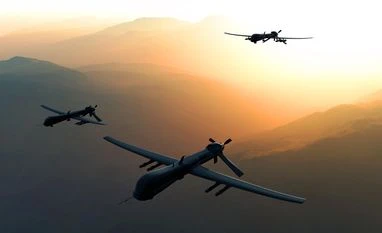
India bans import of drones but not their components and the government has planned additional incentives for manufacturers that procure parts from within the country. (Photo: AdobeStock)
3 min read Last Updated : Jul 04 2025 | 2:54 PM IST
India will launch a $234 million incentive programme for civil and military drone makers to reduce their reliance on imported components and counter rival Pakistan's programme built on support from China and Turkey, three sources told Reuters.
India's push to build more home-grown drones stems from its assessment of the four-day clash with Pakistan in May that marked the first time New Delhi and Islamabad utilized unmanned aerial vehicles at scale against each other. The nuclear-armed neighbours are now locked in a drones arms race.
New Delhi will launch a 20 billion Indian rupees ($234 million) programme for three years that will cover manufacture of drones, components, software, counter drone systems, and services, two government and one industry source, who did not want to be named, told Reuters.
Details of the programme have not been previously reported and its planned expenditure is higher than the modest 1.2 billion rupees production-linked incentive scheme New Delhi launched in 2021 to promote drone start-ups, which have struggled to raise capital and invest in research.
India's civil aviation ministry, which is leading the incentives programme, and defence ministry did not immediately respond to e-mails seeking comment.
Reuters previously reported that India plans to invest heavily in local industry and could spend as much as $470 million on unmanned aerial vehicles over the next 12 to 24 months, in what government and military officers said would be a staggered approach.
In the past, India has mainly imported military drones from its third-largest arms supplier, Israel, but in recent years its nascent drone industry has scaled up its cost-effective offerings, including for the military, although reliance on China continues for certain components such as motors, sensors and imaging systems.
Through the incentives, India is aiming to have at least 40% of key drone components made in the country by the end of fiscal year 2028 (April-March), the two government sources said.
"During (the India-Pakistan) conflict there was quite a lot of use of drones, loitering munitions and kamikaze drones on both sides," Indian Defence Secretary Rajesh Kumar Singh said last week.
"The lesson that we've learned is that we need to double down on our indigenisation efforts to ensure that we build a large, effective, military drone manufacturing ecosystem."
India bans import of drones but not their components and the government has planned additional incentives for manufacturers that procure parts from within the country, the two government sources said.
The state-run Small Industries Development Bank of India would also support the incentive programme by providing cheap loans for working capital, research and development needs for the firms, the government sources added.
Currently, there are more than 600 drone manufacturing and associated companies in India, according to estimates shared by an industry source involved in the discussions for the incentives programme.


 "India planning ₹2,000 crore drone incentive after Pakistan conflict")

