Bull run in silver: Avoid large lump-sum bets after massive rally

In particular, one-time investments in silver ETFs, which are trading at high premiums, must be avoided
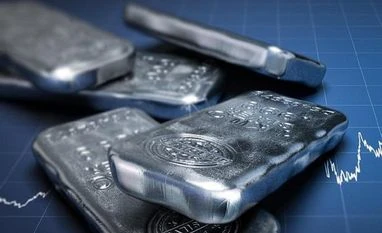
silver trading silver investment
Experts recommend capping exposure to precious metals at 15 per cent of the portfolio. “Within bullion, a 60:40 split between gold and silver is advisable,” says Chainwala. | File Image
Himali Patel New Delhi
4 min read Last Updated : Oct 14 2025 | 10:13 PM IST
Silver recently touched ₹1.73 lakh per kilogram in India and $51.70 per troy ounce in the international market. Silver exchange-traded funds (ETFs) are up 85 per cent over the past year. As with any bull run, the surge has sparked a rush of speculative buying. Here are a few common mistakes investors should avoid in this rally.
 
Ignoring volatility and fundamentals 
Silver tends to be far more volatile than other assets. “Silver’s dual role as both a safe-haven asset and an industrial metal makes it highly sensitive to macroeconomic shifts — from inflation expectations and interest rates to industrial demand and supply disruptions,” says Kaynat Chainwala, assistant vice-president – commodity research, Kotak Securities.
 
Shweta Rajani, head – mutual funds, Anand Rathi Wealth, offers a few numbers. “Over a 10-year horizon, silver has a standard deviation of 3.92 per cent compared to 3.02 per cent for gold and 0.85 per cent for Nifty. As for risk-adjusted return, over a 10-year time horizon, silver has a negative Sharpe ratio of -1.60, compared to 0.44 for gold and 6.60 for Nifty,” she says.
 
Around 60 per cent of silver demand comes from industrial sectors. “A slowdown in manufacturing or renewable energy spending can quickly reverse gains,” says Rajani.
 
Over-allocating, not rebalancing 
During strong bull runs, investors often fall prey to FOMO (fear of missing out) and over-allocate, ignoring the principle of asset allocation. “Portfolios without a proper asset allocation strategy can become overly concentrated and volatile,” says Chintan Haria, principal – investment strategy, ICICI Prudential Mutual Fund.
 
Experts recommend capping exposure to precious metals at 15 per cent of the portfolio. “Within bullion, a 60:40 split between gold and silver is advisable,” says Chainwala.
 
Investors should rebalance periodically if silver’s weight in the portfolio has exceeded their target allocation. “Rebalancing helps manage risk and maintain long-term financial goals even during strong market momentum,” says Haria. 
 
Chasing short-term gains 
The recent rally has attracted investors hoping for quick profits, but this can prove risky. “Silver prices can be highly volatile in the short run,” says Haria.
 
Timing market peaks is nearly impossible and often results in buying high and selling low. Chainwala advises holding silver for at least three to four years. A long-term horizon allows compounding to work in the investor’s favour.
 
Lump-sum investments 
After a sharp rally, making lump-sum investments gives rise to timing risk. “Don’t chase momentum based on the past year’s returns, as the best time to enter a volatile asset is rarely at its peak,” says Ranjit Jha, managing director and chief executive officer, Rurash Financials.
 
Large one-time investments can result in big losses if prices correct sharply. Staggered investing allows investors to benefit from market volatility. “Markets move in cycles, making staggered investments more effective,” says Rajani. Averaging the cost of acquisition can improve the odds of positive returns even when an investor enters near the peak of a cycle.
 
Product-related mistakes 
Physical silver carries risks related to purity, storage, and theft. “Digital silver investments carry specific risks like counterparty risk, quality concerns, and liquidity issues,” says Chainwala. Rajani advises investors to stick to reliable and regulated products and dealers.
 
A supply shortage has led to silver ETFs trading at unusually high premiums, prompting some fund houses to pause lump-sum inflows. “By halting lump sums, fund houses are preventing investors from buying units at the current inflated, temporary cost. Loss is imminent when supply normalises,” says Jha.
 
“Investors should ideally pause all lump-sum investments in silver funds temporarily, while systematic investment plans (SIPs) and systematic transfer plans (STPs) can continue,” says Arihant Bardia, chief investment officer (CIO) and founder, Valtrust.
 
Jha, too, suggests that investors with large sums should wait until physical supply normalises and ETF premiums ease. Finally, he cautions against speculative trading in silver futures, given their high volatility.

One subscription. Two world-class reads.

Already subscribed? Log in

Subscribe to read the full story →
*Subscribe to Business Standard digital and get complimentary access to The New York Times

Smart Quarterly

₹900

3 Months

₹300/Month

SAVE 25%

Smart Essential

₹2,700

1 Year

₹225/Month

SAVE 46%
*Complimentary New York Times access for the 2nd year will be given after 12 months

Super Saver

₹3,900

2 Years

₹162/Month

Subscribe

Renews automatically, cancel anytime

Here’s what’s included in our digital subscription plans

Exclusive premium stories online

  • Over 30 premium stories daily, handpicked by our editors

Complimentary Access to The New York Times

  • News, Games, Cooking, Audio, Wirecutter & The Athletic

Business Standard Epaper

  • Digital replica of our daily newspaper — with options to read, save, and share

Curated Newsletters

  • Insights on markets, finance, politics, tech, and more delivered to your inbox

Market Analysis & Investment Insights

  • In-depth market analysis & insights with access to The Smart Investor

Archives

  • Repository of articles and publications dating back to 1997

Ad-free Reading

  • Uninterrupted reading experience with no advertisements

Seamless Access Across All Devices

  • Access Business Standard across devices — mobile, tablet, or PC, via web or app

Topics :silver ETFsSilver PricesYour money

Next Story



