Home / Health / What breathing air at AQI 50 feels like for your lungs and body, explained
What breathing air at AQI 50 feels like for your lungs and body, explained
AQI 50, a figure Delhiites can only dream of, still isn't pure air. Doctor explains how even at this level, your body works to counter invisible pollutants
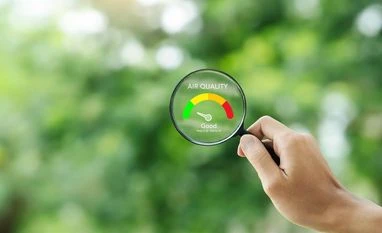
An AQI of 50 may look safe on screen, but the air still carries fine particles. (Photo: AdobeStock)
An AQI (Air Quality Index) of 50 feels like a beautiful, faraway dream for people living in toxic Delhi and other big cities. It is the kind of air that those in the mountains or near forests breathe every day. Light, fresh, and invisible, not the grey-brown haze that makes eyes burn and throats sore. But what does it actually do to your body? Does it finally let your lungs relax?
Not entirely. “There is no such thing as air that is completely safe, even at an AQI of 50. However, it is many times better than what people in metro cities face every day,” says Dr Pankaj Chhabra, Clinical Director–Pulmonology at Marengo Asia Hospitals, Faridabad.
He points out that every breath contains traces of fine particles, 2.5 microns or less in diameter, called particulate matter (PM2.5). These particles are about 30 times smaller than a human hair, and while larger ones are trapped by nasal hair, PM2.5 can penetrate the body through the lungs and enter the bloodstream. Other common pollutants in “clean” air include ozone and nitrogen dioxide, though at AQI 50, they remain within levels considered safe for public health. So, even at an AQI of 50, your lungs are constantly filtering microscopic particles. What’s “good” on the AQI scale is actually a relative term. AQI 50 is “good” for Delhi, but it is still five times worse than clean air in rural or coastal areas. For context, the Central Pollution Control Board's (CPCB's) annual average permissible limits for PM 2.5, PM 10 and NO2 are 40 ug/m3, 60 ug/m3 and 40 ug/m3, respectively, while the World Health Organization's safe limits are much lower at 5 ug/m3, 15 ug/m3 and 10 ug/m3 for the three pollutants respectively.
“The ideal body functions best in air that has no particulate matter and little to no oxidants,” Dr Chhabra explains. “But that’s theoretical — in the real world, we are always dealing with some level of exposure.”
According to Dr Chhabra, for most healthy individuals:
The lungs are in their comfort zone. Breathing at this air quality places very little stress on your respiratory system.
Oxygen exchange happens optimally, and your body’s in-built antioxidant mechanisms efficiently neutralise the low-level pollutants present.
This means your lungs and heart are operating at their best possible efficiency in the current environmental context.
However, there’s a nuance for people with asthma or chronic obstructive pulmonary disease (COPD). Even at AQI 50, their airways may remain hypersensitive. “Small particles or gases can still produce mild airway inflammation in hyper-responsive airways,” Dr Chhabra points out. For them, “good air” might still come with a tinge of irritation or mild coughing spells.
Still, Dr Chhabra stresses that even if AQI 50 is not perfect, it is the healthiest possible air most Indian cities can offer. “It is the recovery zone for your respiratory system. Use it well. Exercise outdoors, air out the indoors, and allow your body to enjoy the relief,” he says.
What does AQI really measure?
The Air Quality Index (AQI) is a number that indicates how clean or polluted the air is. It is calculated based on key pollutants such as PM2.5, PM10, ozone, nitrogen dioxide, sulphur dioxide, and carbon monoxide.
The CPCB classifies air quality into six categories. An AQI between 0 and 50 is considered Good, meaning minimal impact on health. Levels between 51 and 100 are Satisfactory, where some may feel slight discomfort. AQI 101–200 is Moderate, which can cause mild breathing issues; 201–300 is Poor; 301–400 is Very Poor; and anything above 400 is Severe, posing health risks even to healthy individuals.
Since you're already here
…and clearly interested in your health, take a moment to explore our varied range of stories on wellness, medical research, and public health insights.

 "What breathing air at AQI 50 feels like for your lungs and body, explained")


 Connect with us on WhatsApp