Home / Health / Why your takeaway coffee cup could be hidden source of microplastics intake
Why your takeaway coffee cup could be hidden source of microplastics intake
A new study warns that hot takeaway coffees served in plastic cups may release thousands of microplastic fragments, raising fresh questions about everyday plastic exposure
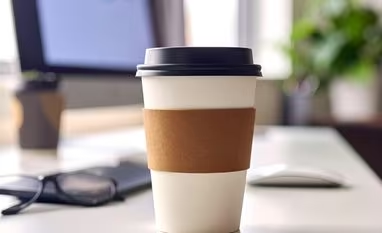
Disposable coffee cups were found to release microplastics, especially at higher temperatures. (Photo: AdobeStock)
Every day, millions of people drink takeaway coffee without giving much thought to the cup it comes in. But new research suggests that hot beverages served in plastic cups may expose drinkers to thousands of microplastic particles.
The study, titled Release of microplastics from commonly used plastic containers: Combined meta-analysis and case study, published in the Journal of Hazardous Materials: Plastics, found that heat significantly increases the release of microplastics from commonly used cups. By analysing data from 30 studies covering 237 observations and testing hundreds of coffee cups, researchers concluded that all-plastic cups release the highest number of microplastic fragments when filled with hot liquids.
The study highlighted that the hotter the drink, the more microplastics are released, especially from all-plastic cups.
What are microplastics?
Microplastics are tiny fragments of plastic ranging from about one micrometre (smaller than a grain of dust) to five millimetres (roughly the size of a sesame seed). They form when larger plastic products break down or when plastics shed particles during everyday use.
These particles have been detected in food, water, air, and even in human blood and organs. While scientists are still working out what long-term exposure means for human health, early research has linked microplastics to inflammation, oxidative stress, and cellular damage in laboratory studies. That uncertainty is precisely why researchers are paying closer attention to everyday sources of exposure.
Why are takeaway coffee cups under the microscope?
Disposable cups are used on a massive scale. Globally, over 500 billion disposable cups are consumed annually, with a significant portion from single-use coffee cups, according to a February 2024 study published in Resources, Conservation and Recycling.
Most people assume paper cups are plastic-free. In reality, almost all paper coffee cups have a thin plastic (polyethylene) lining to stop leaks. Some cups are entirely plastic. Both types can release microplastics, especially when filled with hot liquid. ALSO READ | Microplastics are contaminating your food & water, here's how to fight back
Does temperature really make that much of a difference?
The researchers conducted a large meta-analysis, pooling results from 30 peer-reviewed studies covering 237 observations. Across different plastics such as polyethylene (PE), polypropylene (PP), PET and polystyrene, rising temperature consistently led to higher microplastic release.
Reported releases ranged from a few hundred particles per litre to more than eight million particles per litre, depending on the material and conditions. In contrast, soaking time that is how long the drink stayed in the cup, did not show a consistent effect.
What did the researchers find when they tested real coffee cups?
To mirror real-life use, the team tested 400 commonly used coffee cups collected from cafés in Brisbane, Australia. They compared two types: all-plastic polyethylene cups and paper cups lined with polyethylene. Each was tested with cold liquid (5 degrees Celsius) and hot liquid (60 degrees Celsius).
Both cup types released microplastics, but there were two clear patterns. First, material mattered. Plastic-lined paper cups consistently released fewer microplastics than all-plastic cups. Second, heat sharply increased release. When the temperature rose from cold to hot, microplastic release from all-plastic cups jumped by about 33 per cent.
Based on these measurements, a person drinking one 300 ml hot coffee a day from an all-plastic cup could ingest roughly 363,000 microplastic particles in a year. For the plastic-lined paper cups, the authors state they released less microplastic than the pure plastic cups, but no exact particle count is provided.
The study authors underscore that choosing reusable cups and being mindful of very hot drinks in plastic and plastic-lined cups can lower everyday risks. For more health updates, follow #HealthWithBS

 "Why your takeaway coffee cup could be hidden source of microplastics intake")


 Connect with us on WhatsApp