Home / Immigration / Canada courts tech talent after Trump's $100,000 H-1B visa fee shock
Canada courts tech talent after Trump's $100,000 H-1B visa fee shock
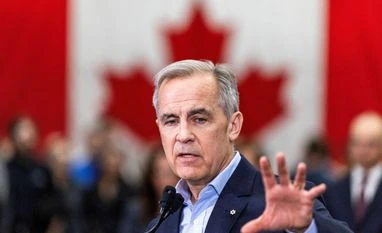
Canada is positioning itself to lure tech workers priced out of the US after Donald Trump's $100,000 H-1B visa fee, with Prime Minister Mark Carney signalling fresh incentives for skilled migrants
Canadas Prime Minister Mark Carney delivers remarks at Marmen Inc., a steel fabrication and machining company, during his Liberal Party election campaign tour in Trois-Rivieres, Quebec Canada April 22, 2025. REUTERS/Carlos Osorio
Planning a move to North America for work? Canada is pitching itself as a friendlier option, particularly for those in technology who once looked to the United States.
Canadian Prime Minister Mark Carney said his government is weighing steps to attract professionals who might once have sought an H-1B visa in the US before the recent policy shift under President Donald Trump.
“What is clear is that the opportunity to attract people who previously would’ve got so-called H-1B visas,” said Carney in London on Saturday. “Many of those workers are in the tech sector and willing to move for work.”
Trump’s $100,000 H-1B charge
Trump signed an executive order last week that introduced a $100,000 fee on new H-1B applications. The move has unsettled companies in need of global talent in fields such as computer programming and engineering.
Canada’s previous test run
Canada has tried similar measures before. In 2023, Ottawa offered three-year open work permits to H-1B holders. The quota of 10,000 was filled within 48 hours.
Entrepreneur Martin Basiri, who helped design that scheme, said he wants to see a fresh version, this time tied to companies that generate jobs inside Canada.
“That would balance the need for skilled labour with concerns about unemployment, currently above 7 per cent, and pressures on housing and infrastructure,” Basiri said.
Domestic supply not enough
Sector leaders argue that the country cannot rely solely on its own graduates.
“Our reproduction in Canada is 1.3. We do not have enough domestic students to fill our workforce,” said Virginia Machiavello, CEO and president of Machiavello Consulting Limited, during an MSM Unify Live Expert Session on Canada student pathways. “And the challenge that’s coming up with commercialising and building out manufacturing and commercialising our resources, we’re going to need a skilled workforce. We do not have those numbers.”
Canada is not alone in this push. Both Germany and the UK are presenting themselves as alternative destinations for skilled workers now reconsidering the US route.

 "Canada courts tech talent after Trump's $100,000 H-1B visa fee shock")


 Connect with us on WhatsApp