Home / India News / 'No PUC, no fuel' policy to continue after Grap-IV is lifted: Delhi govt
'No PUC, no fuel' policy to continue after Grap-IV is lifted: Delhi govt
Delhi's Environment Minister Manjinder Singh said that approval has also been granted for four new vehicle emission testing centres, along with permission to open additional testing facilities
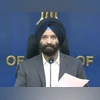
Delhi Environment Minister Manjinder Singh Sirsa addresses a press conference regarding pollution control norms in the national capital. (Photo: PTI)
In a further crackdown on polluting vehicles, Delhi's Environment Minister Manjinder Singh Sirsa on Tuesday said the government will continue its 'No PUC, No fuel' policy even after lifting the graded response action plan (Grap) IV restrictions.
He said enforcement of anti-pollution measures would continue even after Grap-IV is eased, adding that vehicles without a valid Pollution Under Control (PUC) certificate will not be allowed to operate in the city.
The policy was introduced last week by the Delhi government as part of its broader efforts to curb pollution in the national capital. On Monday, Sirsa said that over 212,000 new PUC certificates were issued following the strict implementation of the measures.
SIrsa also said that recent inspections had found multiple PUC centres not operating, while 12 were detected with faulty equipment. He added that the centres have been suspended and served notices, warning that violations will invite strict action.
He said that approval has also been granted for four new vehicle emission testing centres, along with permission to open additional testing facilities for commercial vehicles.
Apart from these pollution control measures, the government has proposed allocating ₹100 crore for the rejuvenation of around 1,000 water bodies in the national capital.
DTC to take over all buses: Sirsa
Sirsa also said that the Cabinet has approved the proposal to take over bus operations from Delhi Integrated Multi-Modal Transit System (DIMTS), giving the Delhi Transport Corporation (DTC) a 100 per cent responsibilty of running the buses in the national capital.
DTC will take over 100 per cent operations from April 1, 2026, Sirsa said, adding that the move will help in route rationalisation and also provide jobs to unemployed drivers and conductors.
All these measures come in the wake of hazardous pollution levels in and around the national capital. On Tuesday, Delhi’s air quality deteriorated sharply, with the average air quality index (AQI) recorded at 414 at 8 am, placing the city in the ‘severe’ category.

 "'No PUC, no fuel' policy to continue after Grap-IV is lifted: Delhi govt")


