Former Indian cricket captain Mahendra Singh Dhoni last month filed an application to trademark “Captain Cool”, the sobriquet long linked to his calm and composed demeanour on the field.
Dhoni thus joins the growing list of Indian celebrities seeking intellectual property rights to protect their name and brand value.
In 2023, actor Amitabh Bachchan secured legal protection for his personality rights, safeguarding the commercial use of his name, image, voice, and other distinctive attributes. Soon after, actor Anil Kapoor obtained an order from the Delhi High Court restraining unauthorised use of his name, likeness, voice, image, or elements of his persona — including his iconic catchphrase “jhakaas” — for monetary gain.
Similarly, in 2024, Jackie Shroff was granted protection by the Delhi High Court, shielding his name, image, voice, likeness, and signature catchphrase “bhidu” from unauthorised commercial exploitation.
However, legal experts say Dhoni’s case is materially different. Unlike the above examples, Dhoni’s application involves trademarking a fan-bestowed nickname rather than his personal name or a phrase uniquely coined — or used — by him.
Nilanshu Shekhar, founding partner at Delhi-based law firm KAnalysis, said there’s a critical distinction between persona/personality rights and trademark rights.
“Though persona rights are part of trademark rights, they’re not the same. ‘Captain Cool’ is not intrinsically linked to Mahendra Singh Dhoni’s personality in the way ‘MSD’ is,” he explained. “One cannot monopolise a generic term like ‘Captain Cool.’ Any calm and composed person, celebrity or otherwise, could be described that way,” he said. “Moreover, there are glaring irregularities in the trademark application approval, which we have challenged.”
Dhoni filed his trademark application through the Trademarks Registry’s Kolkata office under Class 41, which covers education, training, entertainment, sporting, and cultural activities. The application was accepted and advertised in the Trademark Journal on June 16, 2025.
After filing, applications are examined by the registrar, and if found acceptable, published in the Trademark Journal to allow for public objections. Dhoni’s application is currently at this stage.
If no opposition is upheld within 120 days, the trademark is registered. Otherwise, the matter proceeds into a quasi-judicial process involving evidence, counter-statements, and hearings. In Dhoni’s case, two formal objections have already been raised.
The first came from Shekhar-led KAnalysis, which objected on grounds including procedural flaws, lack of evidence showing prior commercial use, and the generic nature of the phrase “Captain Cool”.
Last week, Delhi-based lawyer Ashutosh Choudhary also lodged an objection, arguing that the phrase is too common and descriptive to warrant exclusive ownership. It is frequently used to describe any calm and composed sports personality, he contended.
Cashing in on fandom Legal experts also caution that allowing individuals to monopolise fan-given titles risks setting a problematic precedent.
“For instance, many southern movie stars like Prabhas, Krishnam Raju, and Ambarish have been widely known as ‘Rebel Stars.’ Such terms belong to popular culture and collective expression,” said Vishwas H Devaiah, professor at BITS Law School. “Turning them into private commercial property undermines the public domain and the free use of language — especially when the phrase wasn’t created by the celebrity seeking trademark protection.”
Devaiah added that Dhoni’s application hinges on proving that the public strongly associates “Captain Cool” specifically with commercial offerings under his control — a link that has not yet been clearly established.
“Fans often give such titles affectionately, with no intention of enabling their commercial monopolisation,” he said. “Granting trademark rights in these instances may have a chilling effect on creative expression and commercial speech, especially for journalists, content creators, and small businesses referencing public figures in good faith,” he added.
Akshat Pande, managing partner at law firm Alpha Partners, warned that if the “Captain Cool” trademark goes through, it could trigger a wave of similar attempts by celebrities to trademark nicknames given to them by fans.
“The commercial value of a celebrity’s persona is immense, and fan-given names often become synonymous with their brand,” he said.
More likely than not, Dhoni’s attempt would pave the way for other celebrities to seek commercial control over public nicknames with significant brand value, Devaiah added. “Phrases like ‘Thalaiva’ (Rajinikanth), ‘Dada’ (Sourav Ganguly), or ‘King Khan’ (Shah Rukh Khan) are deeply embedded in fan culture and could become attractive for trademark protection,” he observed.
Ultimately, Dhoni’s application will hinge on whether “Captain Cool” is deemed sufficiently distinctive beyond fandom to qualify for trademark protection. The outcome could shape how trademark bodies or courts handle celebrity monikers in the realm of intellectual property.
Highlighting gaps in Indian IP law, Rahul Hingmire, managing partner at Vis Legis Law Practice, pointed out that India lacks a clear statutory framework governing personality or publicity rights, unlike countries such as the United States.
For instance, in the US, music stars Beyoncé and Jay-Z had sought to trademark their daughter’s name, Blue Ivy Carter, in 2012, shortly after her birth. The celebrity couple applied with the United States Patent and Trademark Office. However, a wedding planner who had been using the name, “Blue Ivy Events”, for her business opposed the move. Beyoncé eventually secured the trademark rights for Blue Ivy Carter
“Even if someone argues that ‘Captain Cool’ is a generic phrase, Dhoni can counter it by proving that in India, at least, it unequivocally refers to him and not to any other player or product,” he explained. “His consistent public branding, including during ICC campaigns, ad endorsements, and team merchandise, strengthens the case.”
While the phrase ‘Captain Cool’ may have originated as a fan-given or media-driven term, it has, over time, acquired a distinct and unequivocal secondary meaning uniquely tied to Dhoni’s personality, professional stature, and commercial identity, said Atishree Sood, principal associate of law firm DMD Advocates.
“The relative objection under Section 11(1) raised due to a previously cited mark has been addressed through a rectification petition, and that conflicting mark no longer poses a legal barrier,” she said. “The remaining third-party opposition appear to be based on generic or non-distinctive grounds, which do not hold when assessed against the actual market recognition of the mark.”
Isheta T Batra, founder of law firm TrailBlazer Advocates, said that while it is true that the claim of use of the nickname since 2008 is not accompanied by evidence, that alone is not determinative. “Indian trademark law focuses on public association, not just documentary trail. The real test is whether the average person unmistakably ‘links’ ‘Captain Cool’ to Dhoni. It clearly does.”
She added that provided the case is made to reflect his existing goodwill and association, opposition would face an uphill battle. “I believe this isn’t about monopolising a phrase; it’s about protecting against misuse of a reputation he built,” she said.
Dhoni’s pursuit of the “Captain Cool” trademark thus sits at the intersection of fan culture, intellectual property, and commercial law — a test case that could influence how India handles celebrity titles and the balance between private rights and public domain.
To file a trademark in India, an applicant must comply with the Trade Marks Act, 1999. The basic requirements include:


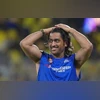 "MS Dhoni wants to trademark 'Captain Cool'; legal experts raise flags")









