Last Tuesday, the leaders of the Association of Southeast Asian Nations (Asean), the Gulf Cooperation Council (GCC), and China gathered in Kuala Lumpur, Malaysia, with a view to enhance economic co-operation. The joint announcement after the Asean-GCC-China summit talked of, besides many other issues, promoting free trade, negotiations for a Asean-China Free Trade Area 3.0 Upgrade and a China-GCC free trade agreement. Such conferences and announcements are not uncommon. However, it is remarkable that the smaller member countries of Asean prioritize the benefits of interdependence, keeping aside many differences between them.
Asean is a grouping of Brunei, Indonesia, Thailand, Malaysia, Singapore, Philippines, Laos, Cambodia, Myanmar and Vietnam with a combined population of about 685 million, combined nominal GDP of about $4.3 trillion and average per capita GDP of about $6,300. Some like Myanmar, Cambodia and Laos are quite poor. Yet, Asean has not hesitated to push for and join the Regional Comprehensive Economic Partnership agreement that includes China, Japan, South Korea, Australia and New Zealand. In fact, Vietnam, Brunei, Singapore and Malaysia have become part of the Comprehensive and Progressive Agreement for Trans-Pacific Partnership also, which strives for free trade between 11 countries in the Asia-Pacific region.
The Asean countries have different forms of government and they live under the shadow of a powerful China but some like Philippines and Thailand have military alliances with the United States while some like Vietnam rely heavily on exports to the United States. Some Asean countries like Vietnam, Philippines, Cambodia, Brunei and Indonesia are wary of Chinese territorial claims on certain islands in and around the South China Sea but they have put such disagreements on the backburner in the interest of economic gains.
Deepseek says that in 2023 Asean countries exported goods worth $416 billion to China and imported goods worth $495.7 billion from them. Countries like Malaysia, Vietnam, Myanmar etc. are part of China’s Belt and Road Initiative. Some territorial disputes amongst the Asean countries, say between Philippines and Thailand, Cambodia and Vietnam, have also not been allowed to come in the way of greater cooperation and collaboration for all round economic benefit. The intra-Asean merchandise trade is estimated at about $450 billion. The Asean countries have become important links in many global supply chains. It is not easy to break the links.
India has a free trade agreement with Asean.
Despite the efforts of our Customs to stifle imports under the agreement, in 2024-25 the imports from Asean amounted to $84 billion, an increase of 5.65 per cent over the previous year, whereas our exports to Asean totaled to around $39 billion, a decrease of 5.45 per cent. The agreement is due for a review this year to address non-tariff barriers and prevention of misuse of the tariff concessions.
Asean’s merchandise exports in 2024 are estimated at about $1.9 trillion and imports at about $1.8 trillion. About 21.5 per cent of its exports go to China and only 4.5 per cent to India. Only 2.1 per cent of its imports are sourced from India and about 23 per cent from China.

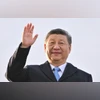 "Asean and our neighbouring countries now drifting closer to China")











