Formula One's 2026 reset signals motorsport's shift beyond the roar

As Formula One's 2026 reset approaches, motorsport is learning to exist without the roar that once defined it
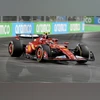
Formula One
As Formula One heads into its 2026 reset, motorsport faces a quieter future — where speed still thrills, but the roar that once defined racing slowly fades away. (Photo: PTI)
Ayushi Singh New Delhi
4 min read Last Updated : Jan 09 2026 | 11:33 PM IST
As the new year’s high wears off and routine returns, motorsport begins its slow reawakening. Dust lifts off garage floors. Pit walls wake up. The conference room lights come on long before the engines do. 
The 2026 Formula One season is close enough now to be felt — not just anticipated, but argued over. Team launches, driver line-ups, regulation resets. The familiar chatter of a sport preparing to return. But beneath it, something else has been building for years. Not a new sound, exactly, but the slow removal of one. Alongside the talk of new cars and new combinations sits a more unsettled question: What motorsport has been shedding as it changes. Not only in rules or technology, but in texture. In how it announces itself. 
Noise. This matters because Formula One remains motorsport’s loudest reference point. It is the most watched, the most circulated — a championship whose season-long broadcast reach stretches past a billion viewers worldwide. When Formula One changes, it reshapes what most people recognise as motorsport. 
With the new season approaching, these changes are becoming tangible. The 2026 regulations will rebalance power itself, splitting it equally between internal combustion engines and electric systems. Smaller, lighter cars and fully sustainable fuels follow from that decision. This is not a tweak, but a commitment. What that redesign alters is not just how the cars perform, but how the sport occupies space. When power is balanced rather than concentrated, no single element dominates the moment. The spectacle loosens and the attention drifts from eruption to execution, from what overwhelms to what holds. Motorsport becomes something that asks to be watched closely, not something that insists on being heard. Nothing is missing exactly, but everything feels rearranged.
 
The light goes green and nothing happens. The stand doesn’t vibrate. The ears don’t move before the eyes do. For a moment, the body waits for a cue it has learned to trust — a warning that never comes. Speed is already there, but it arrives without ceremony.
For decades, motorsport trained audiences to listen before they looked. Sound told you where to stand, when to flinch, when to step back. Engines arrived before cars did. Presence preceded proximity. Noise wasn’t decoration. It was instruction. 
That grammar settled most firmly during the V8 era. Engines announced themselves kilometres away. Tracks were remembered by how they sounded as much as how they looked. Cars didn’t need to be seen to be known. 
Now, that order has quietly reversed. Power is split, managed, distributed — and with it, sound loses authority. Volume once stood in for danger, effort, seriousness. Motorsport demanded a physical response. 
Speed remains. But the body’s relationship with the machine shifts. Silence is no longer absence; it is redistribution. Attention moves elsewhere — to movement, to control, to strategy stretched across laps rather than compressed into a single overwhelming note. 
This transition did not begin with Formula One alone. Formula E, launched in 2014, removed the roar entirely, redirecting attention towards energy management and timing. MotoE, introduced in 2019, altered bike racing in a similar way, making posture, lean angle and braking carry more of the drama. Endurance racing has long rewarded restraint over excess, stretching spectacle across hours rather than seconds. 
Taken together, this stops feeling accidental. Different formats, arriving at similar conclusions. Sound no longer doing the work of authority. 
That unease has surfaced inside Formula One too. Asked about how the 2026 cars will sound, Max Verstappen has been notably cautious, acknowledging that the engines will feel different — and not necessarily familiar. Something is lost in that shift, and it deserves to be said plainly. The roar did something to the body that silence never quite will. There was theatre in that excess, a sense of arrival that required no explanation. 
But motorsport has never stayed still for long. What is changing now isn’t speed itself, but how it chooses to exist in space. Power no longer needs to announce itself to be felt. The cars pass again, clean and contained. This time, the eye is ready before the ear.

One subscription. Two world-class reads.

Already subscribed? Log in

Subscribe to read the full story →
*Subscribe to Business Standard digital and get complimentary access to The New York Times

Smart Quarterly

₹900

3 Months

₹300/Month

SAVE 25%

Smart Essential

₹2,700

1 Year

₹225/Month

SAVE 46%
*Complimentary New York Times access for the 2nd year will be given after 12 months

Super Saver

₹3,900

2 Years

₹162/Month

Subscribe

Renews automatically, cancel anytime

Here’s what’s included in our digital subscription plans

Exclusive premium stories online

  • Over 30 premium stories daily, handpicked by our editors

Complimentary Access to The New York Times

  • News, Games, Cooking, Audio, Wirecutter & The Athletic

Business Standard Epaper

  • Digital replica of our daily newspaper — with options to read, save, and share

Curated Newsletters

  • Insights on markets, finance, politics, tech, and more delivered to your inbox

Market Analysis & Investment Insights

  • In-depth market analysis & insights with access to The Smart Investor

Archives

  • Repository of articles and publications dating back to 1997

Ad-free Reading

  • Uninterrupted reading experience with no advertisements

Seamless Access Across All Devices

  • Access Business Standard across devices — mobile, tablet, or PC, via web or app

Topics :Formula OneIndian MotorsportBS OpinionF1 racingF1 motor racing

Next Story



